
Your first run came back fine. The second run — the one you scaled up to meet a retail purchase order — did not. Maybe the emulsion thickened in the tank, maybe it separated on the shelf two months early, maybe the fill weight drifted and the viscosity no longer matched the approved sample. Either way, you are now holding inventory you cannot ship and a buyer asking why batch two does not match batch one. The formula did not change. Everything around it did.
What small manufacturers and retail buyers actually say
“Small cosmetics manufacturer/formulator trying to grow from B2B to D2C with zero clients”
— a post title on r/Entrepreneur
“Zero quality variance at 50K+ units”
— the promise retail buyers actually test
The first quote describes where most of this industry starts: one formulator, a working bench formula, and a plan to grow. The second describes the wall they hit. A retail buyer does not ask whether your formula is good. They ask whether unit 47,000 behaves like unit 12. That question is not about chemistry. It is about whether your manufacturing process is controlled tightly enough to reproduce the same product tens of thousands of times. Most small operators have never had to answer it, because most small operators have never run a batch that large.
Where the variance actually comes from
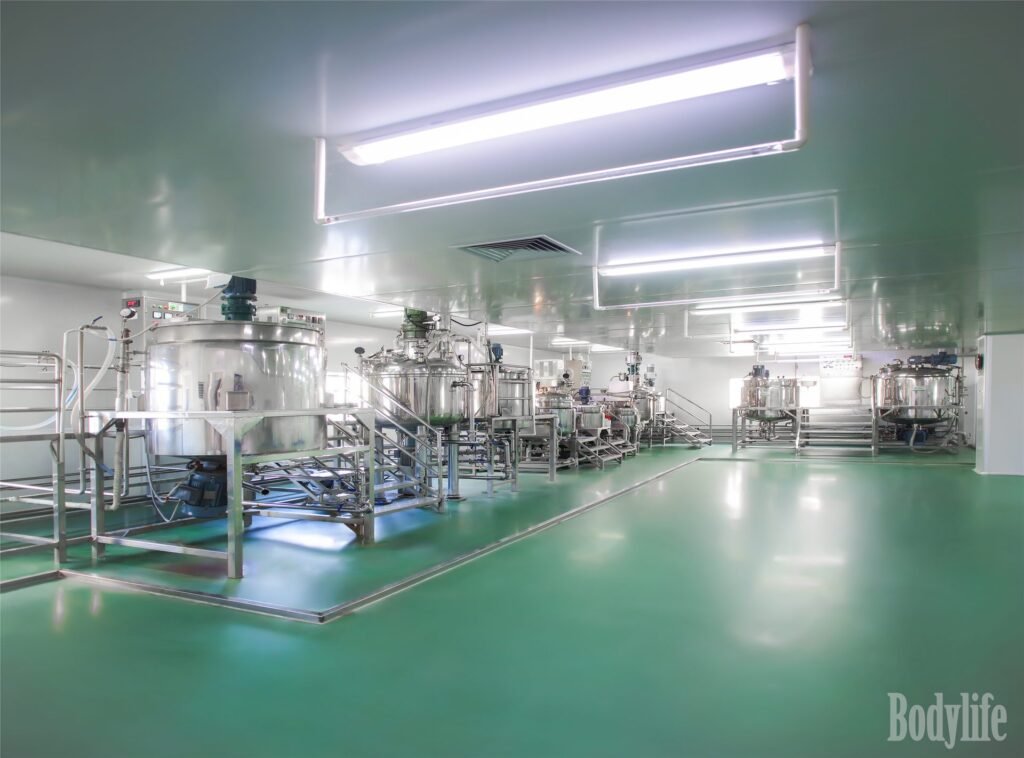
Small batches and large batches are frequently not made on the same equipment, and this is the part that catches people. A 50 kg batch might be mixed in a benchtop or pilot-scale vessel and filled semi-manually or on a short filling line. A 5,000 kg batch runs in a production tank with a different agitator geometry, a different fill system, and automated controls. The obvious change is speed. The change that matters is shear.
Shear rate is the mechanical stress the emulsion sees as it is mixed, pumped, and pushed through a homogenizer or a filling nozzle. It is not a constant. It scales with the impeller tip speed, the tank geometry, the pump type, and how long the product spends in motion. An emulsion that was stable at the shear of a small mixer can separate, thicken, or thin at the shear of a production line — same ingredients, same percentages, different physical structure. Mixing time and temperature profile shift too, because a large tank heats and cools more slowly and the product sits at temperature longer. Those are process variables, and they change the product even when the formula document does not.
This is the reason scale-up is a process engineering task, not a purchasing task. The formula is a document. The product is a process. When you send a bigger purchase order to a manufacturer, you are not ordering more of the same thing — you are commissioning a different manufacturing event and assuming it will produce an identical output. Sometimes it does. The point is that nobody checked. A manufacturer without process engineering capability has no way to characterize the shear, time, and temperature differences between your small run and your large one, so they cannot tell you in advance whether the emulsion will hold. They find out when the batch fails, and so do you.
Regulators take this seriously for the same underlying reason. Stability data that supported a filing was generated on product made a particular way. If the manufacturing process changes materially — different equipment, different shear, different thermal history — that stability data may no longer describe the product you are actually selling. A material change in process can invalidate the stability package, which means the paperwork that let you sell batch one may not cover batch two. Scale-up is therefore not a commercial formality. It is a validation step that should be planned with its own batch and its own testing, not assumed to happen automatically the moment the order gets bigger.
What this means if you are scaling a retail line
If you are moving from a bench formula or a small B2B run into a retail or mass-market program, treat the first large batch as a test, not a shipment.
- Ask your manufacturer how they validate a process change before you place the big order. If the answer is vague, that is your answer.
- Budget a scale-up batch with its own stability and micro testing. It is cheaper than a failed production run and a missed retail window.
- Confirm the small and large volumes run inside the same quality system. If your small runs and large runs are made at different sites under different controls, you have two products, not one.
- Require a certificate of analysis per batch and compare it against the approved specification. A variance you can see is a variance you can stop before it ships.
- Plan your timeline around validation, not around the purchase order. Retail launch dates built on an unvalidated scale-up are built on an assumption.
For brands moving into manufacturing for retail and mass-market programs, the practical rule is simple: the larger the run, the more the process — not the formula — determines whether the product matches. If you are developing a line where texture and stability are the whole selling proposition, such as private label hand cream, that distinction is the difference between a reorder and a recall.
How we approach it
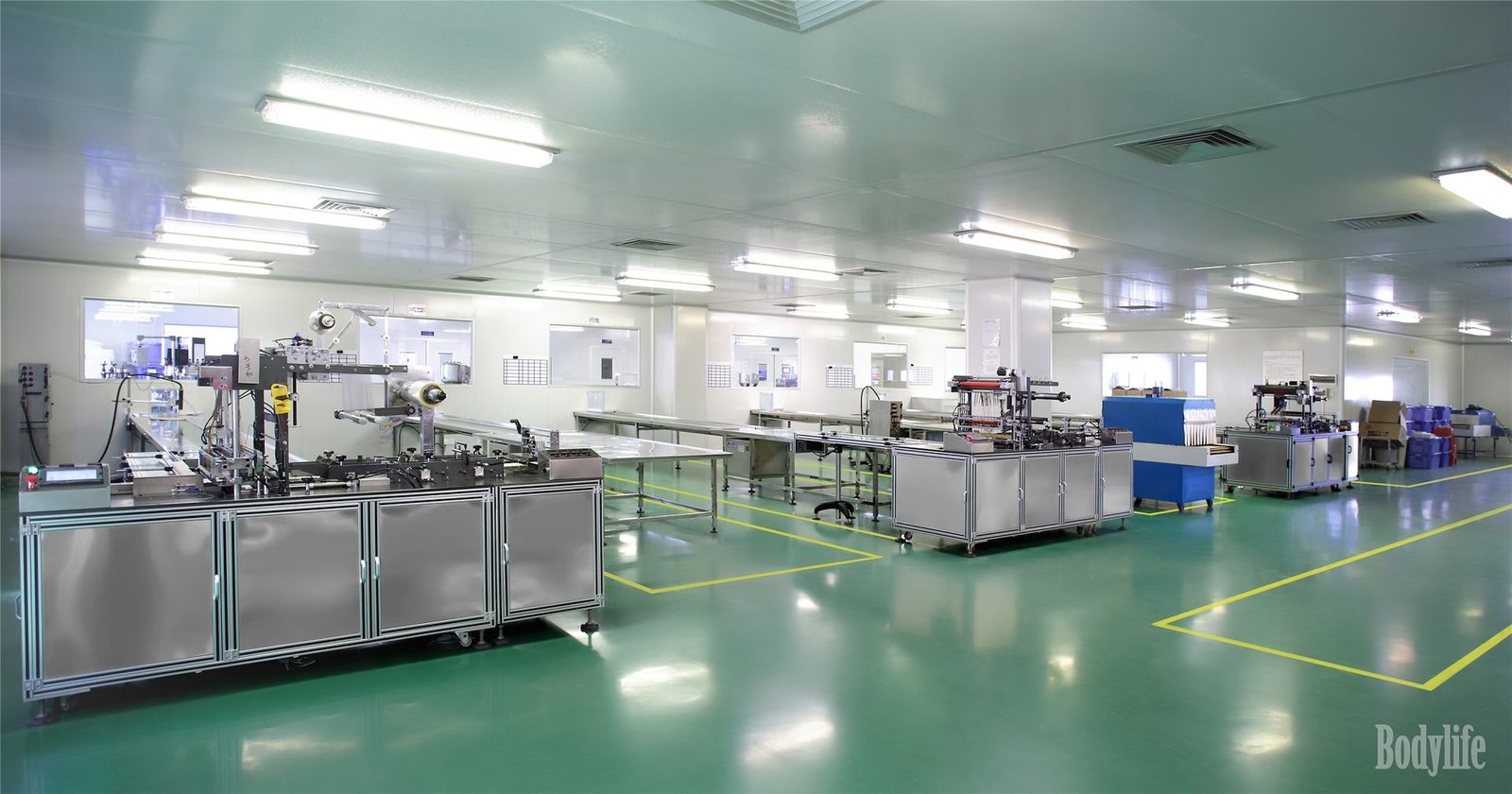
BodyLife has run two GMP-certified plants covering 60,000+ m² with 20+ production lines since 2002. Small and large volumes run inside the same quality system rather than being routed to different suppliers, which is what makes a scale-up comparison meaningful in the first place. The in-house R&D laboratory handles formulation, stability, microbiology, and heavy metals, and can re-validate after a process change rather than assuming the original data still applies.
- Two GMP sites, 60,000+ m² combined, 20+ production lines — small and large runs under one quality system.
- In-house R&D laboratory for formulation, stability, microbiology, and heavy metals, with re-validation after a process change.
- Annual capacity of 100M+ units; OEM minimum order of 500 units scaling to 100,000+.
- Per-batch testing and a certificate of analysis with full chain traceability, so a variance between runs is detected rather than shipped.
- Custom formulation takes 3–6 months, with the development fee credited against the first order.
- Sampling in 7–10 days; first order 20–30 days; reorder 7–14 days.
- Packaging one-stop sourcing including PCR material, with stock packaging supporting small orders.
- Quotation within 48 hours. 25 years in operation, 300+ active clients in 50+ countries, 1,000+ verified raw material suppliers.
- Eight certifications: GMP, ISO 22716, ECOCERT, COSMOS, FDA, SMETA, CPNP, CPSR — see our certifications.
Frequently asked questions
Why does a formula change at scale?
The formula document does not change — the process around it does. Larger batches run on different equipment with different shear rates, mixing times, and temperature profiles, and an emulsion that was stable under one set of conditions can separate or thicken under another. The ingredients are identical; the physical structure of the product is not.
Does scale-up need new stability testing?
Often yes. Stability data describes product made a particular way, and a material change in manufacturing process can mean that data no longer covers what you are selling. Regulators treat this as a real risk, which is why scale-up should be planned as a validation step with its own batch and testing rather than assumed to carry over.
What is process validation?
It is the documented confirmation that a specific manufacturing process, run on specific equipment, reliably produces product that meets specification. In practice it means making the batch, testing it, and comparing the results against the approved standard before committing to full production volume.
Can one factory handle both small and large runs?
Yes, and it is preferable. When small and large volumes run inside the same quality system on the same site, the scale-up comparison is meaningful and the process engineering capability is already in place. BodyLife runs OEM volumes from 500 units up to 100,000+ across two GMP sites with 20+ production lines.