Choosing an OEM manufacturer comes down to eight verifiable criteria — certifications, MOQ, lead times, in-house R&D, QC system, regulatory support, packaging integration, and communication — not to whoever quotes the lowest price. Most brand owners discover this after they have already signed with the wrong factory and lost three months. This guide is written from the manufacturer’s side of the table, so you know what to ask and what a real answer sounds like.
The short version
A factory that cannot produce a certificate number, a redacted COA, and a batch traceability record is not a manufacturer you can scale with. Price is the last variable to compare, not the first.
When you should — and shouldn’t — use an OEM manufacturer
Use an OEM manufacturer when you want to reach market in months rather than years, when your volume does not justify a production line, or when you need more than one category. Building your own facility is a multi-year, multi-million-dollar commitment before your first unit ships. An established factory already has the cleanroom, the QC lab, the ingredient supplier relationships, and the regulatory paperwork.
There are also situations where OEM is the wrong answer:
- You need fewer than a few hundred units. Below roughly 500 units, hand-made or lab-scale production is more realistic than a factory run.
- Your process is genuinely proprietary equipment. If your product depends on a machine nobody else owns, you need to own it.
- You have not defined the product yet. OEM manufactures what you specify. It does not invent your product for you — that is ODM or custom formulation, which is a different conversation.
The eight criteria that actually matter
1. Certifications — and how to verify them
Ask for the certificate number and issuing body, not a PDF photo. GMP and ISO 22716 are the two baseline certifications for cosmetic manufacturing. GMP covers good manufacturing practice; ISO 22716 is the cosmetic-specific international standard. A factory claiming either should be able to give you a certificate with a number you can check with the certification body.
Beyond the baseline, the certifications that matter depend on your market and positioning: ECOCERT and COSMOS for natural and organic claims, FDA registration for US distribution, CPNP notification and CPSR safety reports for the EU, and SMETA for ethical audit requirements at retail.
2. MOQ versus your actual volume
Match MOQ to your first order, not to your five-year ambition. A factory quoting a 10,000-unit minimum tells you something useful: they are set up for volume, and your 2,000-unit launch will be a low priority. A factory quoting 500 units tells you they have flexible lines — but you should then ask what that flexibility costs per unit.
The honest answer is usually tiered. Standard MOQ sits around 3,000 units per SKU for most skincare and haircare. Factories that work with startups will often go to 500–1,000 units for brands with a credible plan, sometimes with a higher per-unit price or a shorter payment window.
3. Lead times — all three of them
Ask for sampling time, first-production time, and repeat-order time separately. These are three different numbers and factories often quote only the most flattering one.
- Sampling: 7–10 days is typical for a formula already in the factory’s library. Custom formulation is measured in months, not days.
- First production: 20–30 days after sample approval and material arrival is realistic.
- Repeat orders: this is where a good factory shows its value — 7–14 days is achievable when materials are held in stock.
Any factory quoting a 10-day first production run for a new formula is either misunderstanding the question or planning to cut a corner.
4. In-house R&D versus a trading company
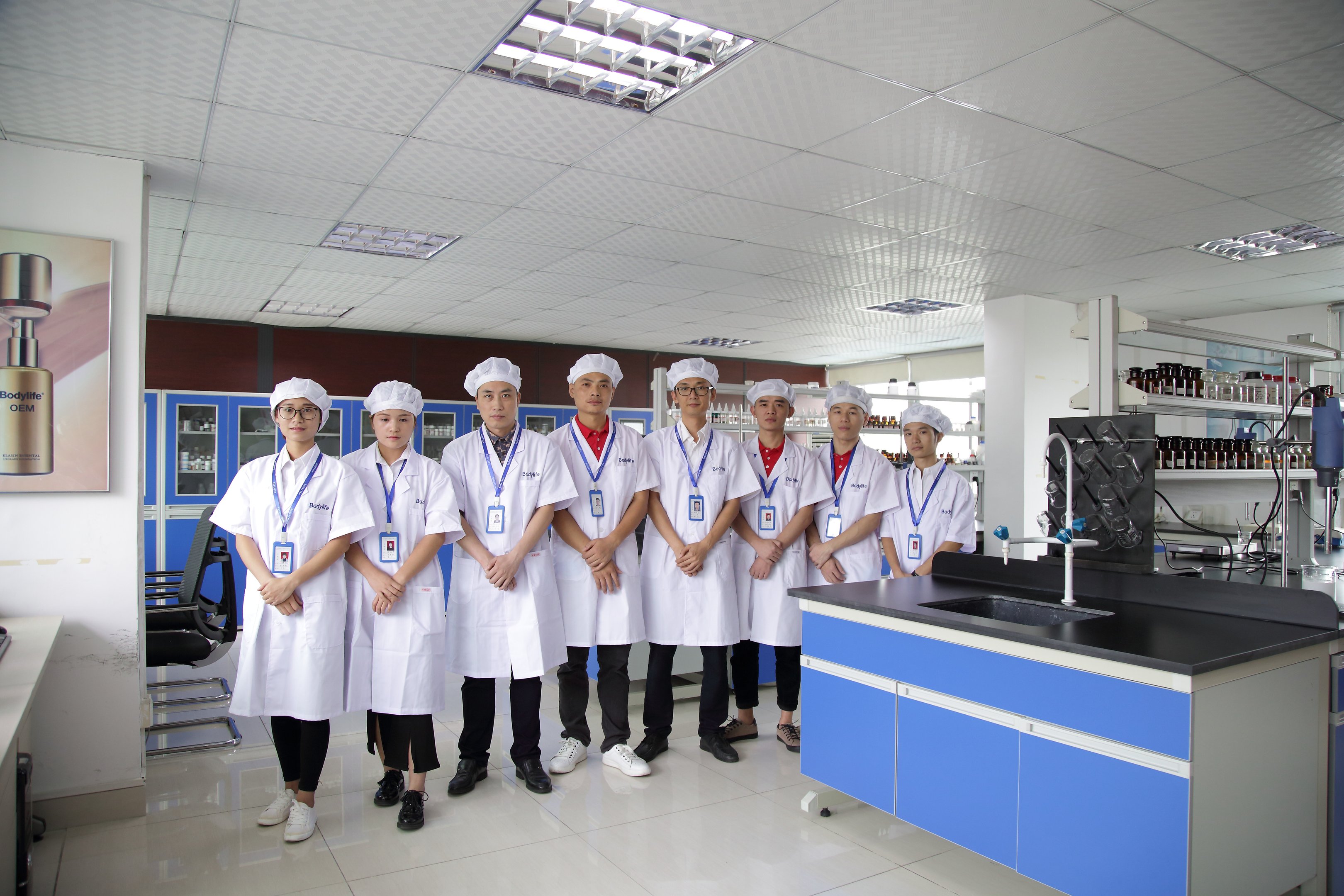
Ask one question: “Can I visit the lab and meet the chemist who will work on my formula?” A trading company cannot answer this. A factory with real R&D can.
In-house formulation capability matters for three reasons: your formula can be adjusted when a raw material is discontinued, stability problems get diagnosed rather than blamed on you, and claims can be formulated toward rather than retrofitted. Ask how many formulators they employ and how many stock formulations they maintain.
5. The QC system
Every batch should be tested and accompanied by a Certificate of Analysis, with traceability from raw material lot to shipped unit. Ask what is tested per batch: microbiology, preservative efficacy, pH and viscosity, heavy metals screening. Ask to see a sample COA — redacted is fine.
A factory that cannot produce a COA on request does not have a QC system. It has a QC intention.
6. Regulatory support
Your factory should be able to tell you what documentation your target market requires — before you ask. US distribution needs FDA-compliant labeling and, under MoCRA, facility registration and product listing. The EU needs a CPSR prepared by a qualified safety assessor plus CPNP notification. Australia, Canada, and the Gulf each have their own requirements.
Ask: “What do you provide for a US launch, and what do you provide for an EU launch?” A factory that answers in specifics has done this before.
7. Packaging integration
One supplier for formula and packaging removes an entire category of delay. When the formula manufacturer and the packaging supplier are different companies, nobody owns the compatibility problem — and compatibility problems are discovered after filling, when they are most expensive.
Ask whether they can source primary and secondary packaging, whether they hold stock components that support lower MOQs, and what sustainable options they actually have in hand (PCR plastic, refill systems, FSC-certified board) rather than on a brochure.
8. Communication and NDA
Insist on a mutual NDA before you send the formula. A factory that resists signing one is telling you how they treat intellectual property. The NDA should cover the formula, the brief, and any test data you share.
Then watch the response time during the quoting stage. A factory that takes a week to answer a pre-sale question will take longer once you have paid.
How to audit a factory: six places to look
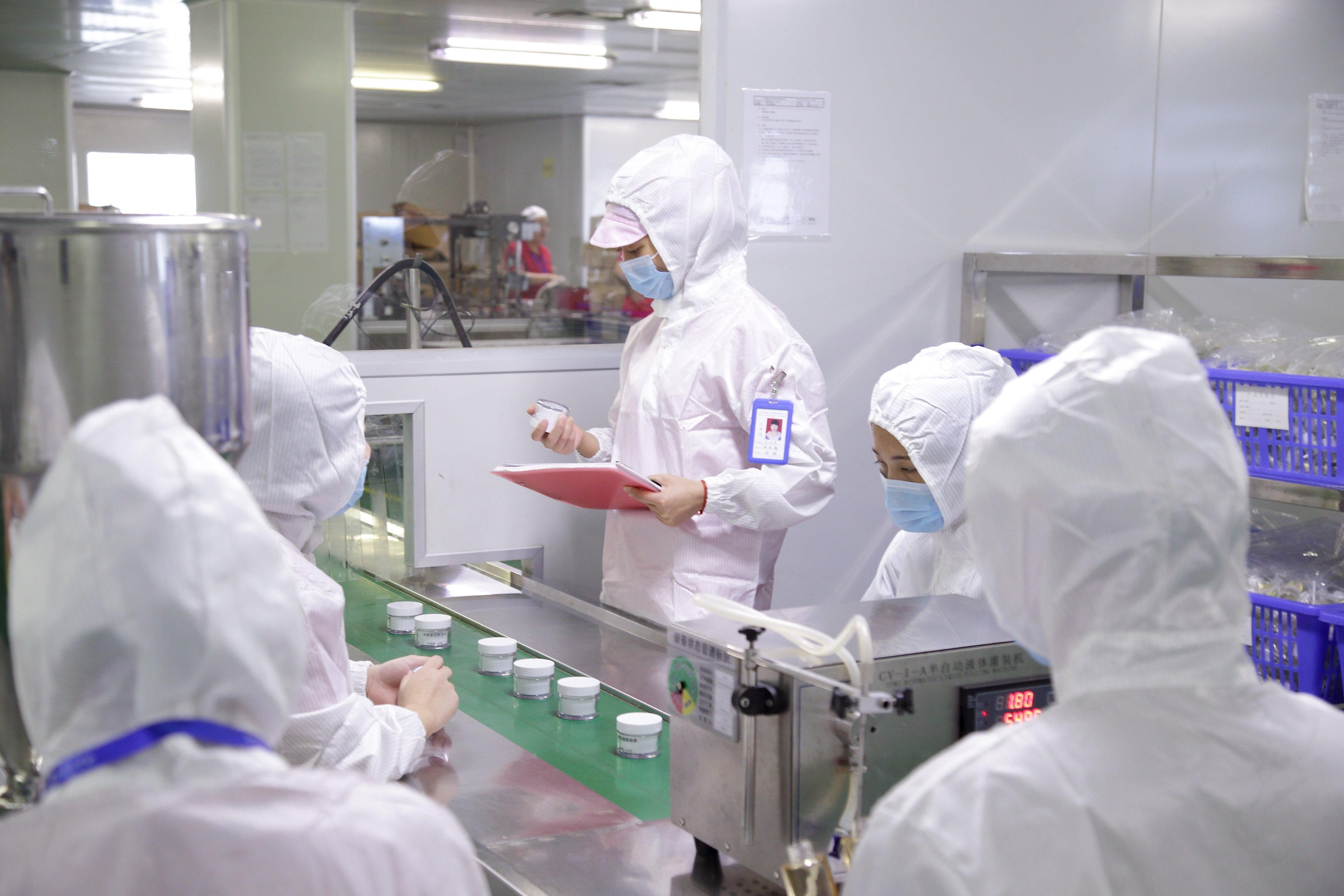
A factory audit is not a tour. Ask to see six specific things and watch how readily each is produced.
- The production floor. Look for cleanroom classification signage, gowning procedures actually followed, and line clearance records between batches.
- The QC laboratory. Ask what instruments are on the bench. A real lab has a pH meter, viscometer, incubator, and balance in daily use — not a locked display case.
- The raw material warehouse. Look for lot numbers, expiry dates, and quarantined material clearly segregated. Ask how incoming materials are released.
- Batch records. Ask to see a completed batch record with signatures. This is the single best indicator of whether the documented system matches the actual one.
- Certificate originals. Not photos on a wall. The certificate with number and issuing body.
- The waste and rejected-goods area. A factory that shows you its reject rate is a factory with a quality culture.
Red flags that should end the conversation
Five answers should stop the process regardless of price.
- ✗“We can’t show you the production floor.” Every legitimate factory can arrange a visit or a video walkthrough under NDA.
- ✗Certifications shown only as images, with no certificate number.
- ✗A quote dramatically below every other quote. The difference is usually a cheaper preservative system, a thinner formula, or a component substitution you will discover after filling.
- ✗Refusal to sign an NDA.
- ✗A sampling turnaround shorter than three days for a new formula. That is not a sample; that is a stock product in a different bottle.
What to prepare before your first call
Six documents turn a vague enquiry into a quote within days.
- Product brief: category, target consumer, texture, key claims, fragrance direction, price point.
- Target retail price — this determines the formula tier and the packaging budget.
- Launch timeline — working backwards from your channel’s onboarding date.
- Packaging preference — format, material, and whether you already have artwork.
- Target markets — because regulatory scope changes the documentation and sometimes the formula.
- First-order volume and 12-month forecast — two numbers, not one.
What working with BodyLife Global looks like
“Gentle formulation is our DNA — every product is designed for long-term daily-use safety, not just performance on a claims sheet.”
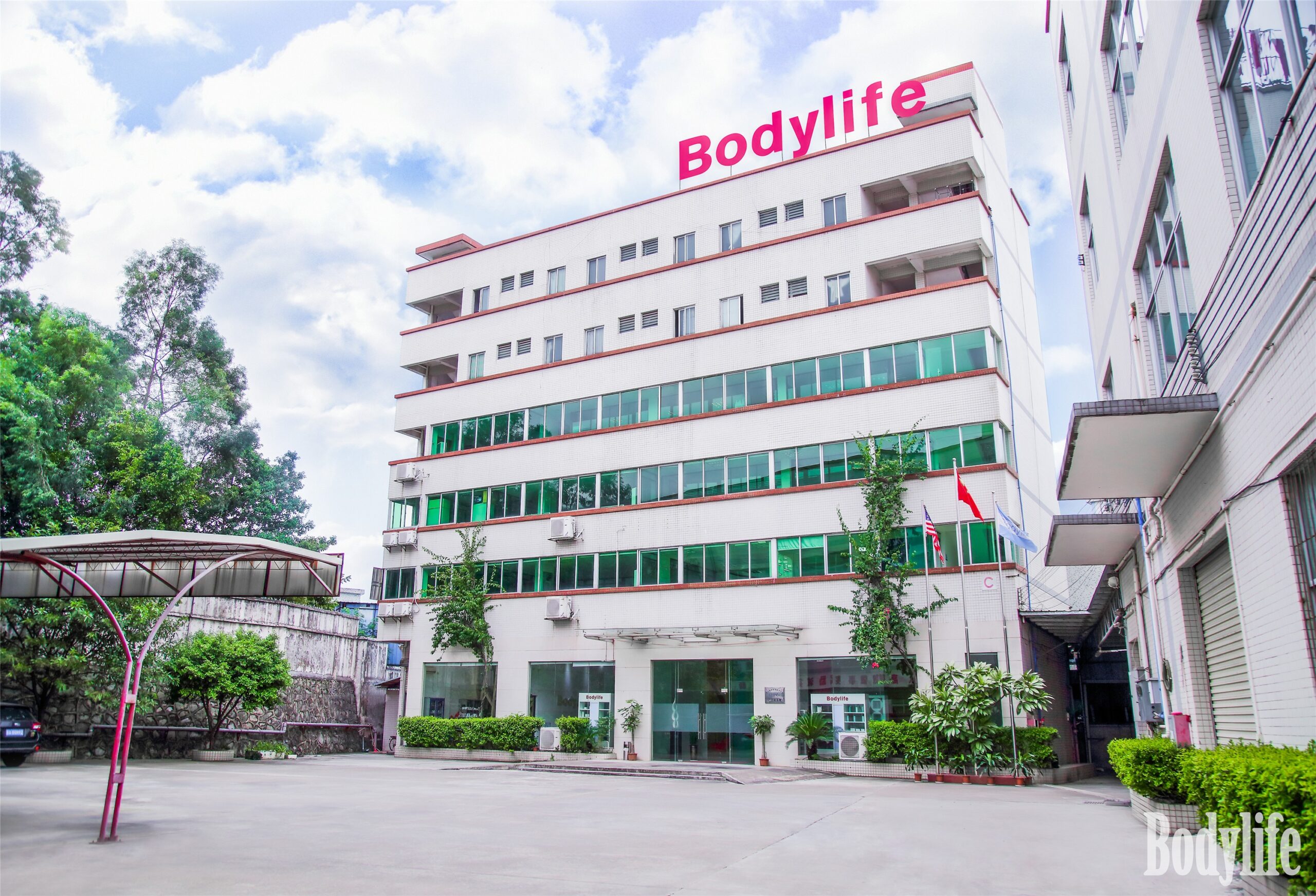
BodyLife Global is a cosmetic OEM/ODM manufacturer operating two GMP-certified campuses totalling more than 60,000 square meters, with 20+ production lines and a capacity of 100 million units per year. The company was founded in 2002 and today serves 300+ active clients across 50+ countries.
The specifics a brand owner usually wants first:
- Certifications: GMP, ISO 22716, ECOCERT, COSMOS, FDA registration, SMETA, CPNP and CPSR documentation support.
- Categories: skincare, haircare, body care, and pet care, plus dedicated lines for baby and maternity, silver hair, feminine intimate care, scalp care, and men’s grooming.
- Library: 5,000+ existing formulations and access to 1,000+ vetted ingredient suppliers.
- MOQ: 3,000 units standard; 500–1,000 units for early-stage brands with a credible plan.
- Timelines: sampling in 7–10 days, first production in 20–30 days, repeat orders in as little as 7–14 days.
- Quoting: within 48 hours of a complete brief.
- Payment: 30/70 or 40/60 depending on order volume, with account terms available for established clients.
- Price positioning: under US$1 per unit for budget-friendly formulas, US$1–2 standard, US$2–3 premium, above US$3 for top-tier formulations.
Two boundaries worth stating plainly. First, on color cosmetics the factory manufactures liquid foundation and pressed powder, but does not produce tool-type items such as brow pencils or eyeshadow compacts. Second, the differentiator is not a patented delivery system — it is a formulation philosophy built around long-term daily-use safety, applied across special-population lines, and backed by per-batch testing with a Certificate of Analysis and full traceability.
Frequently asked questions
How long does it take from first contact to first shipment?
For an existing formula, typically six to eight weeks: one week of sampling, two to three weeks of material lead time running in parallel, and 20–30 days of production. Custom formulation adds three to six months for development and stability testing.
What is the minimum order quantity?
3,000 units per SKU as standard. For early-stage brands, 500–1,000 units is possible depending on the formula and packaging, usually at a higher per-unit cost.
Can you manufacture my existing formula?
Yes, subject to a manufacturability and regulatory review. Formulas are protected under NDA, and the review identifies any ingredient that is restricted in your target market before production begins.
Do you handle regulatory filing?
The factory provides the documentation required for US FDA, EU CPNP and CPSR, Australia, and Canada — including safety data, ingredient declarations, and manufacturing certificates. The brand owner remains the responsible entity for the filing itself.
What happens if my formula does not work at production scale?
This is identified at the sample and scale-up stage, not after filling. Where an ingredient fails under production conditions, the formulator proposes a substitution and the sample is re-run before bulk production is authorised.
Next step
Send a complete brief and you will have a quote within 48 hours, with the MOQ, lead time, and price tier stated explicitly rather than discovered later.
Request a quote · OEM manufacturing · Private label ODM · Custom formulation
Further Reading
- OEM vs ODM vs Private Label: What's the Difference?
- GMP and ISO 22716: What They Actually Mean for Your Brand
Looking for a manufacturing partner? OEM manufacturing, private label ODM, custom formulation — get a quote within 48 hours.