OEM means you supply the formula and the factory manufactures it; ODM means the factory already has the formula and you adapt and brand it; private label is a narrower form of ODM built on standard, catalogue formulations. The three terms are used almost interchangeably in sales conversations, but they decide who owns the formula, what you pay upfront, and how long it takes to reach market. Choosing the wrong model is the most common reason a first product launch runs late and over budget.
The one-sentence definitions
OEM (Original Equipment Manufacturer): your formula, their factory. You bring a developed formula or a detailed specification. The factory reviews it for manufacturability and regulatory compliance, produces samples, and manufactures at scale. The intellectual property stays with you.
Scale explains why the model matters commercially. Asia-Pacific accounts for 37.8% of global personal care contract manufacturing revenue and is the largest region, with China alone representing 51.0% of that regional total (Grand View Research, 2023). Where your manufacturing sits in that structure determines your cost base and your lead times.
ODM (Original Design Manufacturer): their formula, your brand. The factory maintains a library of developed formulations. You select one, request adjustments — texture, fragrance, active level, claims — and the product is manufactured and branded for you. The base formula typically remains the factory’s IP, with your modifications licensed to you.
Private label: a standardised subset of ODM. The formulation is fixed and offered as-is, usually with a catalogue of stock packaging options. It is the fastest and cheapest route to market, and the least differentiated — because the brand next to you may be selling the same formula.
Side-by-side comparison
| OEM | ODM | Private Label | |
|---|---|---|---|
| Who owns the formula | You | Factory (base), you (modifications) | Factory |
| Development time | You arrive with it ready | 2–8 weeks of adjustment | None to a few days |
| Development cost | Paid to your formulator | Lower; often credited against orders | None |
| Differentiation | Highest | Medium | Lowest |
| Time to first shipment | 4–8 weeks if the formula is production-ready | 6–12 weeks | 3–5 weeks |
| Typical MOQ | Higher (3,000+) | Middle (1,000–3,000) | Lowest (500–1,000) |
| Best for | Brands with a formulator or a proven formula | Brands wanting ownership of the result, not the recipe | Testing a market fast |
Who owns the formula — and why it matters more than the price
If you do not own the formula, you cannot move it. That single fact has cost more brands more money than any other issue in this industry.
Under a pure OEM arrangement, the formula is yours. You can take it to a second factory, you can license it, you can sell the brand with the IP included. Under ODM, the base formula belongs to the factory. You are usually granted an exclusive or non-exclusive licence to use it, but you cannot take the recipe elsewhere — and if the relationship ends, the product ends with it.
In practice, most ODM agreements include a clause granting the brand exclusivity for a defined period and territory. Ask for that clause in writing, and ask what happens to the formula if the relationship ends. A factory that will not discuss this is telling you something.
Cost and timeline differences
ODM and private label are cheaper upfront and faster; OEM is cheaper per unit at volume and slower to start. The reason is straightforward: under ODM the factory has already absorbed the formulation cost and amortised it across many clients, so your fee is largely for adaptation and minimum batch. Under OEM, you have paid a formulator separately, and the factory’s job is production only.
The cost lines that differ:
- Formulation: OEM — you pay an external formulator. ODM — a development fee, often credited against your first production order. Private label — usually none.
- Stability and safety testing: required in all three cases, but under ODM the base formula may already carry historical data that reduces your testing scope.
- Sampling rounds: OEM typically needs fewer rounds if your formula is genuinely production-ready. ODM usually needs 1–3 rounds of adjustment.
- Per-unit cost at scale: OEM is generally lower at high volume because you are not paying a formulation royalty embedded in the unit price.
Which model fits which stage
Early-stage brands should usually start with ODM, not OEM. A brand launching its first three SKUs rarely has a proven formula, and paying for custom development before you know whether anyone will buy the product is an expensive way to learn.
A practical sequence that works:
- Launch (0–12 months): ODM with meaningful modification. You get speed and a differentiated-enough product without owning the recipe.
- Prove the market (12–24 months): once a SKU is selling predictably, commission a custom formulation for that hero product. Now the development cost is justified by known demand.
- Scale (24 months+): OEM on your own formulas, with a second factory qualified as a backup.
Brands that arrive with a formulator or a licensed technology skip step one. Brands that arrive with nothing but an idea should not skip it.
The hybrid reality
Most real projects sit between the three labels. A client selects a base formula from the library, changes the active level, swaps the fragrance, adjusts the viscosity, and specifies custom packaging. Is that ODM or OEM? Commercially it is ODM with modification; practically it is a new product.
The useful question is not “which model am I buying” but “what am I allowed to do with the result”. Ask three things: can I take this formula to another manufacturer, is my exclusivity in writing, and who owns the stability data.
What BodyLife Global offers under each model
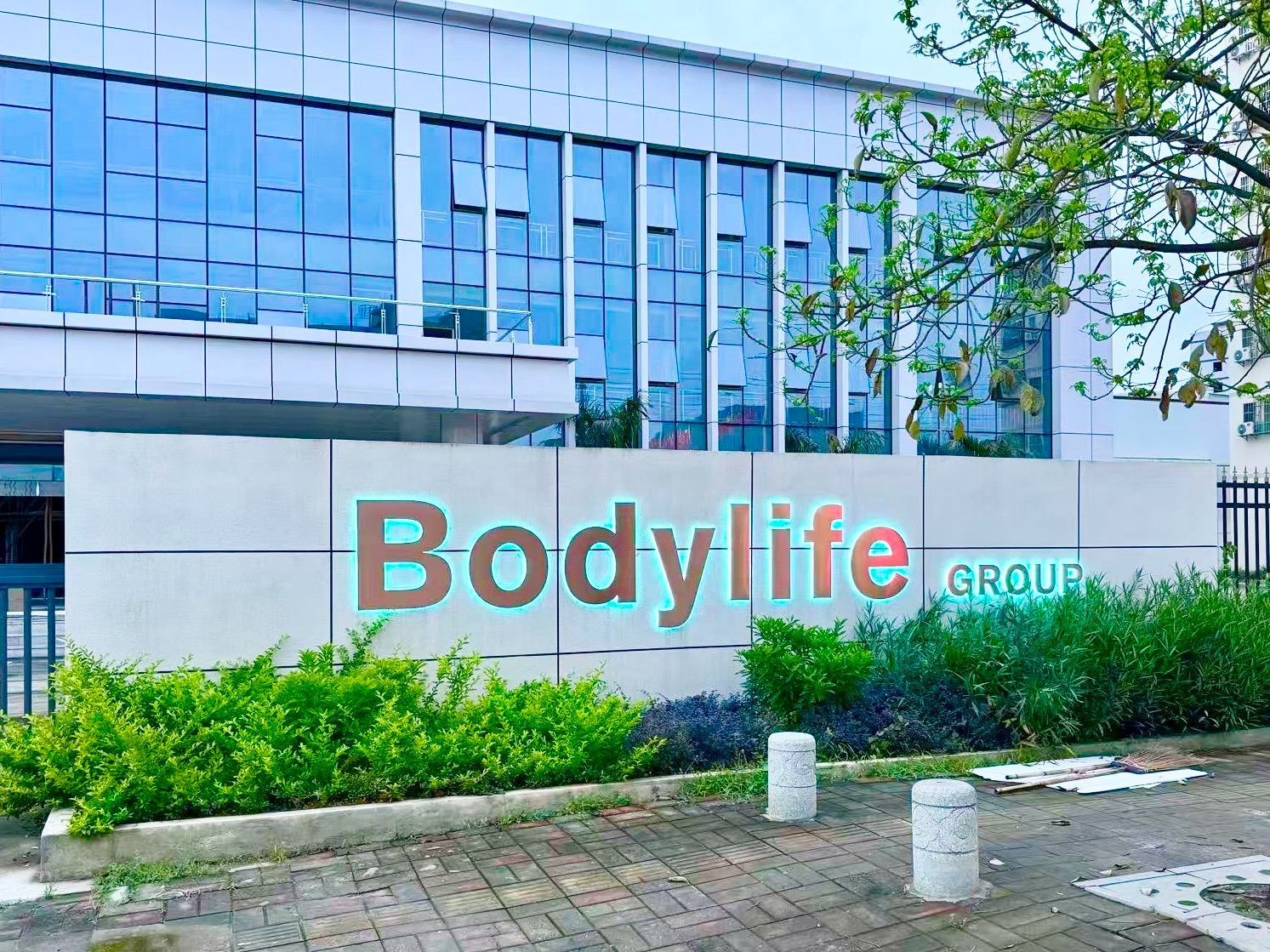
BodyLife Global operates as both an OEM and an ODM manufacturer, with a library of more than 5,000 formulations and in-house development capability. The company runs two GMP-certified campuses totalling over 60,000 square meters, with 20+ production lines and 100 million units of annual capacity, serving 300+ clients across 50+ countries since 2002.
- OEM: your formula, reviewed for manufacturability and regulatory compliance, with NDA protection and strict formula confidentiality. Sampling in 7–10 days, first production in 20–30 days.
- ODM: select from the 5,000+ formula library and modify texture, fragrance, actives, or claims. Development typically 2–8 weeks depending on the depth of change.
- Private label: catalogue formulas with stock packaging, accessible at lower MOQs starting from 500–1,000 units for early-stage brands.
Certifications across the group include GMP, ISO 22716, ECOCERT, COSMOS, FDA registration, SMETA, with CPNP and CPSR documentation support.
The question that decides everything
Not “which model is cheaper” but “what am I allowed to do with the result”. Formula ownership determines whether you can move, license, or sell the product later.
Frequently asked questions
Can I start with private label and move to OEM later?
Yes, and it is the most common path. Many brands launch on a catalogue formula, validate demand, then commission a custom formulation for the product that sells. The transition does not require reformulating the whole range — start with the hero SKU.
Who owns the formula in an ODM arrangement?
The base formulation remains the manufacturer’s intellectual property; the brand typically receives an exclusive licence for a defined period and territory. Modifications developed specifically for the brand are usually negotiated separately. Get the exclusivity terms in writing before production starts.
Is OEM always more expensive?
No — it is more expensive upfront and cheaper per unit at volume. You pay a formulator separately, but you avoid the formulation royalty embedded in ODM unit pricing. Below roughly 10,000 units per year, ODM is usually the better economics.
Can the same factory do all three?
A full-service manufacturer can. The practical test is whether they have in-house formulation capability — a factory that only manufactures will describe everything as OEM, because it cannot offer genuine ODM development.
Next step
Tell us the stage you are at and the product you have in mind, and the reply will recommend a model rather than a price — because the model decides the price.
Request a quote · OEM manufacturing · Private label ODM · Custom formulation
Further Reading
- Low MOQ Cosmetic Manufacturing: What's Realistic in 2026
- Custom Formulation: From Brief to Bulk in 6 Steps
Looking for a manufacturing partner? OEM manufacturing, private label ODM, custom formulation — get a quote within 48 hours.