GMP and ISO 22716 are audited management systems for cosmetic manufacturing, not marketing badges — and holding a certificate does not guarantee a good factory, but the absence of one reliably predicts problems. For a brand owner, these certifications answer three practical questions: can this factory document what it made, can it trace a defective batch, and will a retailer accept the product. This article explains what each standard actually requires, what auditors inspect, and how to verify a certificate is genuine rather than a downloaded image.
Baseline
Cosmetics-specific
Organic claims
Market access
What GMP actually requires
GMP — Good Manufacturing Practice — is a framework for producing consistently, to a defined quality standard, with documented evidence that you did so. It is not a product test; it is a system requirement.
Regulatory pressure on manufacturing is rising. Under MoCRA, FDA was required to propose cosmetic GMP rules by 29 December 2024 and finalise them by 29 December 2025 (21 U.S.C. §364b(c)). As of October 2026 no final rule is in force — FDA has published draft guidance only (FDA). Meanwhile the registration system is already busy: 16,398 facilities and 1.3 million products are listed.
The core obligations:
- Premises and equipment designed and maintained to prevent contamination, with defined cleaning and sanitisation schedules.
- Personnel trained and gowned appropriately, with health and hygiene requirements documented.
- Raw materials received, quarantined, sampled, and released against specification before use.
- Production conducted against a written batch record, with in-process checks and deviation handling.
- Quality control with defined tests per batch and documented acceptance criteria.
- Complaints and recalls with a traceable process to identify and withdraw affected batches.
What ISO 22716 adds
ISO 22716 is the cosmetic-specific international standard; it takes GMP principles and makes them explicit for cosmetics. Where GMP language is generic across pharmaceutical and food manufacturing, ISO 22716 addresses the specifics of cosmetic production: microbiological control, water quality, preservative system validation, and the handling of bulk product between manufacturing and filling.
For a brand owner the practical difference is documentation discipline. ISO 22716 requires a documented quality management system with defined responsibilities, written procedures, change control, and internal audit. A factory certified to ISO 22716 can produce a document trail from raw material lot to finished carton. A factory claiming “GMP” without a specific standard may not be able to.
What auditors actually inspect
Seven areas carry most of the audit weight.
- Water system. Purified water quality and monitoring records — the single most common source of microbiological contamination in cosmetics.
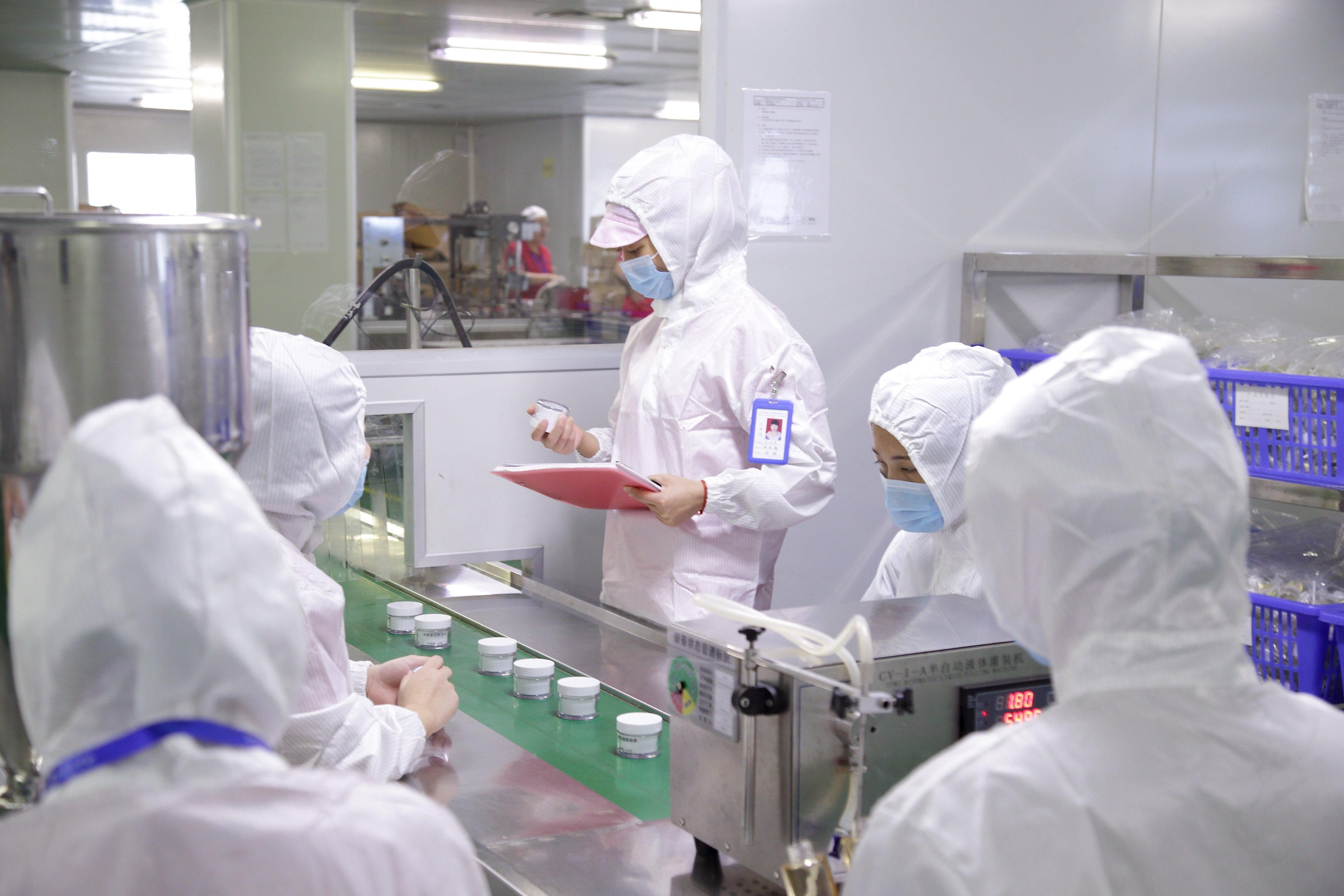
- Cleanroom classification and monitoring. Particle counts, pressure differentials, and environmental monitoring records for the filling area.
- Batch records. Completed, signed, with in-process checks recorded in real time rather than reconstructed afterwards.
- Deviation and out-of-specification handling. Whether failures are recorded and investigated, or quietly discarded.
- Supplier qualification. Evidence that raw material suppliers were assessed, not just purchased from.
- Training records. Signed, dated, and matched to the tasks each operator performs.
- Traceability exercise. Auditors routinely pick a finished batch and ask the factory to trace it backwards to raw material lots. This is where paper systems fail.
How to verify a certificate is real
Three steps, and any legitimate factory will support all three.
- Ask for the certificate number and the issuing certification body. ISO 22716 certificates are issued by accredited bodies, not by the factory itself.
- Check the scope statement. A certificate covers specific activities at a specific site. A certificate for “trading” or for a different address does not cover the factory making your product.
- Verify with the issuing body. Most certification bodies offer an online certificate lookup. This takes minutes and is the only check that actually proves anything.
Common red flags: certificates with no number, certificates where the scope is “manufacture of cosmetics” but the site address does not match the factory you are visiting, expired certificates presented without a renewal date, and certificates issued by bodies with no accreditation.
What happens without certification
The cost of an uncertified factory is paid later, and usually all at once.
- Retail rejection. Most retailers and distributors require GMP evidence during supplier onboarding. Discovering this after your stock is manufactured is expensive.
- Regulatory exposure. In the EU, the responsible person must be able to demonstrate GMP compliance; the CPSR assumes a controlled manufacturing environment.
- Recall impossibility. Without batch traceability, a contamination event cannot be scoped. The entire production run — potentially your whole inventory — becomes unsaleable.
- Insurance and liability. Product liability cover often assumes documented manufacturing controls.
Beyond the baseline
Once GMP and ISO 22716 are established, additional certifications map to specific market and positioning requirements.
- ECOCERT and COSMOS — required if you make organic or natural claims in Europe; they govern ingredient sourcing, processing, and labelling percentages.
- FDA registration — relevant for US distribution, and under MoCRA the facility registration obligation sits with the manufacturer.
- SMETA — an ethical trade audit increasingly requested by retailers alongside quality certification.
- CPNP and CPSR — not factory certifications but market-entry documentation for the EU: a safety report by a qualified assessor plus product notification.
BodyLife Global’s certification position
BodyLife Global operates two GMP-certified campuses totalling over 60,000 square meters, compliant with ISO 22716, with facilities that have been audited by retail groups in Russia and the United States as well as by ECOCERT within the past year. The group holds GMP, ISO 22716, ECOCERT and COSMOS certifications, FDA registration, SMETA audit, and provides CPNP and CPSR documentation support.
Quality infrastructure includes an in-house R&D laboratory for formulation development, stability testing and ingredient analysis; a quality testing centre covering microbiology, preservative efficacy, pH and viscosity, and heavy metals screening; cleanroom production for sensitive products; and climate-controlled warehousing. Every batch is tested, a Certificate of Analysis is issued, and full traceability is maintained from raw material to shipment.
Manufacturing capacity is 100 million units per year across 20+ production lines, serving 300+ clients in 50+ countries since 2002.
What a certificate actually proves
That the system was documented and audited on a specific date, at a specific site, for a specific scope. It does not prove the system is running correctly today. That is what the batch record shows.
Frequently asked questions
Is GMP the same as ISO 22716?
No. GMP is a general good-manufacturing framework; ISO 22716 is the cosmetic-specific international standard that applies GMP principles to cosmetic production with explicit requirements for microbiological control, water quality, and bulk handling. A factory may hold one, both, or claim “GMP” without holding a specific auditable standard.
Do I need a GMP-certified factory to sell cosmetics?
In the EU, the responsible person must be able to demonstrate manufacturing under GMP. In the US, MoCRA introduces facility registration and adverse-event obligations. Commercially, most retailers and distributors require GMP evidence during onboarding regardless of the legal minimum.
How often are these certificates renewed?
ISO 22716 certification typically runs on a three-year cycle with surveillance audits in between. Ask for the current certificate and the date of the most recent surveillance audit — a valid certificate with a lapsed surveillance audit is a warning sign.
Can a trading company hold these certificates?
A trading company can hold a certificate for its own activities, but the certificate must cover the manufacturing site. Always check that the address and scope on the certificate match the factory that will actually make your product.
Next step
Ask for the certificate numbers and the scope statements for any factory you are evaluating — including ours. We will provide certificate numbers, issuing bodies and scope statements to qualified buyers under NDA; a manufacturer that hesitates on this question has answered it.
Request a quote · OEM manufacturing · About BodyLife Global
Further Reading
- Custom Formulation: From Brief to Bulk in 6 Steps
- Cosmetic Packaging MOQ: How Small Brands Should Plan
Looking for a manufacturing partner? OEM manufacturing, private label ODM, custom formulation — get a quote within 48 hours.