You have a production window from a factory, a launch date built on top of it, and a sinking feeling that the two don’t line up. They usually don’t. The number you were quoted is real, but it starts measuring from a point most first-time founders haven’t reached yet.
What indie founders actually say
“Started a skincare business selling at markets and online and I feel stupid”
a post title on r/Entrepreneur
“I have made the product already and tested it on several friends with good results”
a founder describing a home-made batch before approaching manufacturers
These two quotes are the same story at different points on the curve. The first is what it looks like after the launch date slips and the market stock sits in a garage. The second is the belief that causes it: that a product which works on friends is a product that is ready. It keeps coming up because the gap between “my batch works” and “my batch is legally sellable at scale” is invisible until you are standing in it, and nobody selling you a production slot has an incentive to draw you a map of it.
Where the number actually comes from
The production window a factory quotes almost always assumes two things are already done: the formula is final, and the packaging is in hand. On a first run, neither is true. The factory is not lying to you. It is quoting you the length of the manufacturing step, and you are hearing the length of the project. Those are different measurements with different starting lines.
The real critical path on a first cosmetic run runs in series: formula lock, stability testing, packaging tooling and proofing, artwork approval, regulatory filing, then production. Most of these cannot be compressed by working harder or paying more, because each one consumes the output of the one before it. Artwork cannot be approved before the pack exists. The regulatory file cannot be assembled before the artwork is fixed. And stability testing — the step that quietly eats the most calendar — cannot begin in any meaningful way until the packaging is chosen, because its entire job is to prove the formula holds up inside the specific container and closure it will ship in. A formula that is stable in a glass jar tells you nothing about the same formula in an airless pump with a different headspace and a different oxygen exchange rate.
This is the mechanism most first-timers have never had explained: stability testing is a serial prerequisite, not a checkbox. It is validating a system — formula plus package plus closure — not a liquid in isolation. So it cannot finish before the packaging decision, it cannot be shortened by paying for priority, and it cannot be skipped. The clock it runs on is set by real-time chemical and microbiological behaviour, and a lab that promises to compress it is either testing something else or telling you what you want to hear. This is why “20 to 30 days” and “six months” can both be accurate descriptions of the same project. One is measuring from formula lock with packaging on the shelf. The other is measuring from the day you decided to do this.
Then there is the home-made batch. A formula tested on friends is a useful early signal — it tells you the texture is pleasant and nobody broke out in a rash in week one — but it is not stability data and it does not survive a regulatory review. Friends are not a sample population, a week is not a stability window, and a kitchen is not a controlled environment with a microbiological baseline. When a reviewer or a retailer’s compliance team asks for evidence, the gap between “my friends liked it” and “here is the testing and the traceability” is where most first launches lose a quarter. Not because the product was bad, but because the evidence to sell it legally did not exist yet and nobody had put that step on the timeline.
What this means if you are launching a first product
- Build your launch date from formula lock, not from the day you first emailed a factory. Ask every supplier explicitly: “Does this window assume packaging is in hand and the formula is final?”
- Treat packaging selection as a critical-path decision, not a design afterthought. It gates stability testing, which gates everything downstream.
- Do not book a launch event, a retailer slot, or paid marketing against a production window that hasn’t accounted for testing and regulatory filing.
- Budget the calendar for stability testing as a fixed cost of entry. It is not a delay you can negotiate away.
- Understand that your home-made batch is a prototype, not a submission. Plan for the testing that turns one into the other.
- If you are sourcing private label face cream, confirm early whether the stock packaging you want is actually available, because a stock pack in hand shortens the path considerably compared with custom tooling.
How we approach it
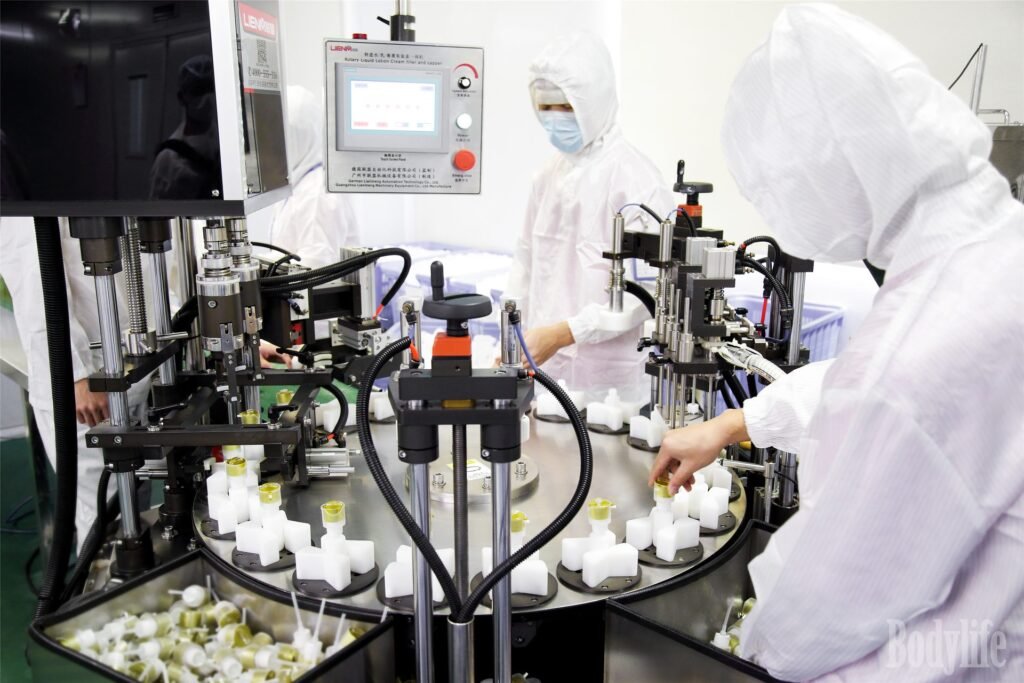
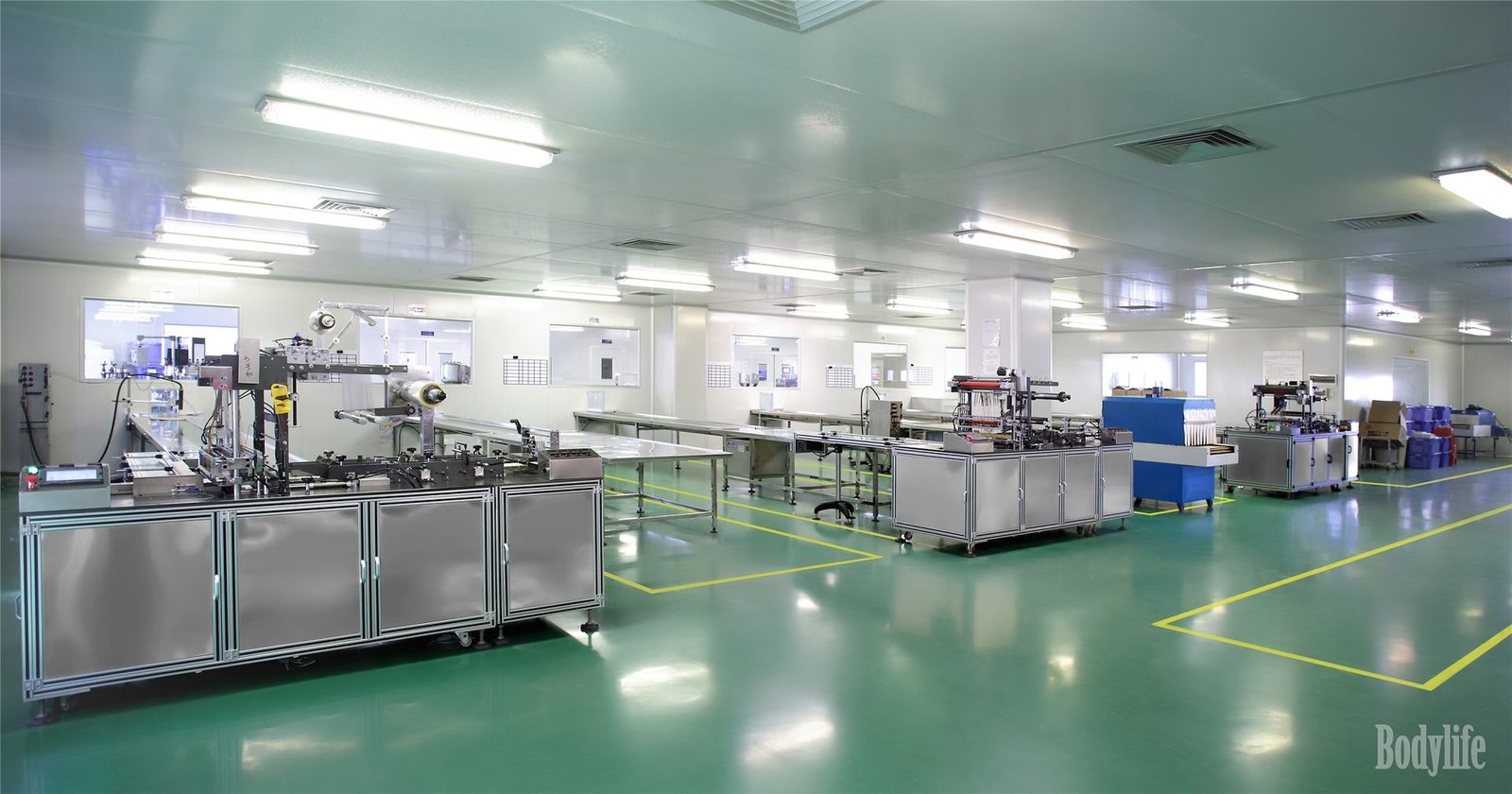
BodyLife has been manufacturing cosmetics since 2002 — 25 years — across two GMP-certified plants totalling more than 60,000 m², with 20+ production lines and annual capacity above 100 million units. We serve 300+ active clients in 50+ countries and hold eight certifications: GMP, ISO 22716, ECOCERT, COSMOS, FDA, SMETA, CPNP and CPSR. You can review our certifications directly.
On the specific problem of the first-run timeline, here is what we actually do:
- Sampling in 7–10 days, so the formula can be locked early rather than iterated during production.
- First production order in 20–30 days once the formula is final, and reorders in 7–14 days.
- Stability, microbiology and heavy-metal testing handled in-house, in our own R&D laboratory, so the testing stage does not queue behind an external lab.
- Per-batch testing with a certificate of analysis and full chain traceability — which is what a regulatory reviewer actually asks for.
- Custom formulation in 3–6 months, with the development fee credited against your first order.
- Packaging one-stop sourcing including PCR material, with stock packaging available to support small orders.
- OEM minimum order of 500 units, scalable to 100,000+, with quotation inside 48 hours.
We work with a lot of first-time founders through our indie and DTC manufacturing programme, and the conversation usually starts with the same correction: the number you need is not the production window, it is the whole path to a legally sellable unit.
Frequently asked questions
How long does a first production run actually take?
The production step itself runs 20–30 days once the formula is final and packaging is in hand. The full path from decision to sellable product is longer, because formula lock, stability testing, packaging proofing, artwork approval and regulatory filing all sit upstream of it and run in series. Plan the project around the whole path, not the manufacturing window.
Can stability testing be expedited?
No, not in the way founders hope. Stability testing validates how a formula behaves inside its intended package over real time, and that behaviour is set by chemistry and microbiology, not by budget. Paying for priority does not compress it. What you can do is start it as early as possible by locking packaging quickly, and keep it in-house so it doesn’t queue behind an external lab’s backlog.
Do I need stability testing before selling?
Yes. A home-made batch tested on friends is a useful signal but it is not stability data and it will not survive a regulatory review. To sell legally and to satisfy retailers and compliance reviewers, you need documented testing and traceability for the product as packaged. Skipping it is the single most common reason a first launch loses a quarter.
What can run in parallel with production?
Once the formula is locked and packaging is confirmed, artwork approval and regulatory filing preparation can progress alongside the build-up to production. What cannot run in parallel is stability testing against packaging selection — the test depends on the pack. Get the packaging decision made early and everything downstream has room to move.