Packaging MOQ, not formula MOQ, is the real constraint on small cosmetic launches — stock components can be bought in the hundreds, but a custom moulded bottle typically starts at 10,000 pieces because the tooling has to be amortised. Most founders discover this after the formula is agreed, which is the wrong order. This article explains the tiers by packaging type, how decoration changes the minimum, and how to sequence packaging and production so neither waits on the other.
Why packaging MOQ is higher than formula MOQ
A filling line can run 500 units profitably; a moulding tool cannot be built for 500 units. The economics are different in kind.
One caveat on the numbers below. No authoritative industry benchmark exists for packaging MOQ — published figures are supplier self-reports. The tiers in this article reflect what is practically achievable in current supply chains, not a standard anyone has ratified.
- Stock components are manufactured in bulk by packaging suppliers and held in inventory. You buy from stock, so your minimum is whatever the distributor’s minimum order is — often 100–500 pieces.
- Custom moulded components require a steel or aluminium tool. Tooling cost is fixed and must be recovered across the production run, which sets a floor around 10,000–30,000 pieces depending on complexity.
- Decoration adds a second minimum. Screen printing, hot stamping, and shrink sleeves each require setup; below a few thousand units the setup dominates the cost.
Typical MOQ by packaging type
| Packaging type | Typical MOQ | Notes |
|---|---|---|
| Stock bottle / jar / tube | 100–500 | From distributor inventory; limited shape and colour choice |
| Stock component with label | 500–1,000 | Label printing is cheap at this volume; the container is not custom |
| Stock component, decorated | 1,000–3,000 | Screen print or hot stamp setup becomes economic here |
| Custom colour on stock mould | 3,000–10,000 | Colour change requires a production run at the moulder |
| Custom mould, new tooling | 10,000–30,000 | Tooling cost US$3,000–15,000, amortised across the run |
| Airless / dropper / pump systems | 5,000–10,000 | Mechanism assemblies carry higher minimums than simple containers |
Stock versus custom: the real cost difference
Stock packaging is not automatically cheaper — it is cheaper at low volume and more expensive at high volume. The crossover is usually somewhere between 10,000 and 20,000 units.
The full comparison:
- Stock at 1,000 units: low component cost per unit, no tooling, but a per-unit price that includes distributor margin. Total outlay is small.
- Custom at 1,000 units: not available. The tooling alone would exceed the value of the order.
- Stock at 30,000 units: distributor margin becomes significant; you are paying a mark-up on every unit.
- Custom at 30,000 units: tooling amortised across the run brings per-unit cost below stock, and the container is unique to your brand.
For a first launch, stock is almost always the right answer. The brand differentiation from a custom bottle is real but rarely worth a five-figure tooling commitment before the product has sold.
How decoration changes the minimum
Decoration is where small orders quietly become expensive. Each method has its own setup and its own practical floor.
- Pressure-sensitive labels — lowest friction, works from a few hundred units, and the most sensible choice for a first run.
- Screen printing — setup per colour per position; economic from roughly 1,000–3,000 units.
- Hot stamping and embossing — higher setup and tooling; typically 3,000+ units.
- Shrink sleeves — excellent for complex artwork and full-container coverage, but the sleeve print run has its own minimum, often 5,000+.
Sequencing packaging against production
Component lead time, not manufacturing time, is usually the longest single wait in a launch. Production takes 20–30 days; a custom component can take 30–60 days before production even begins.
The correct sequence:
- Select packaging format before the formula is finalised, because formula-packaging compatibility is a real constraint — some formulas attack certain plastics, and some preservative systems behave differently in airless versus open containers.
- Order components as soon as artwork is approved, in parallel with stability testing rather than after it.
- Request a compatibility test between the frozen formula and the chosen component before bulk component ordering.
- Hold a small buffer — 3–5% extra components — because filling losses and damage are normal, and a short shipment of containers can stall a whole batch.
Inventory risk and cash flow
Packaging is paid for before it generates revenue, and it is not returnable. A 10,000-unit component order is cash committed months before the first sale.
Practical mitigations:
- Split the order where the supplier allows — take delivery in two calls against one production run.
- Use stock for launch, custom for reorder. This defers tooling until demand is known.
- Confirm the supplier’s reorder lead time in writing. A component that takes 60 days to reorder constrains your growth more than its price does.
Sustainable packaging and its MOQ reality
Sustainable options exist at small volume, but the choice is narrower than marketing suggests. Post-consumer recycled (PCR) plastic is available in stock formats; refill systems and biodegradable materials usually require custom tooling and therefore carry custom minimums. FSC-certified cartons are accessible at low volume because cartons are printed rather than moulded.
Be sceptical of a supplier offering a fully custom, fully sustainable component at 500 units. Either the component is stock, or the sustainability claim is thinner than the label suggests.
What BodyLife Global offers
BodyLife Global provides packaging design, sourcing, and filling as a single service, including stock components that support lower-MOQ projects and custom structural design where volume justifies tooling. Primary packaging covers bottles, jars, tubes, pumps, droppers, airless containers, sachets, and ampoules in glass and plastic; secondary packaging covers boxes, inserts, sleeves, gift sets, and retail-ready display. Decoration includes pressure-sensitive labels, shrink sleeves, silk screen, hot stamping, embossing, and UV printing.
Sustainable options include PCR plastics, biodegradable materials, refillable systems, FSC-certified paper packaging, and soy-based inks. Because formula and packaging are handled by the same manufacturer, compatibility is tested before filling rather than discovered after.
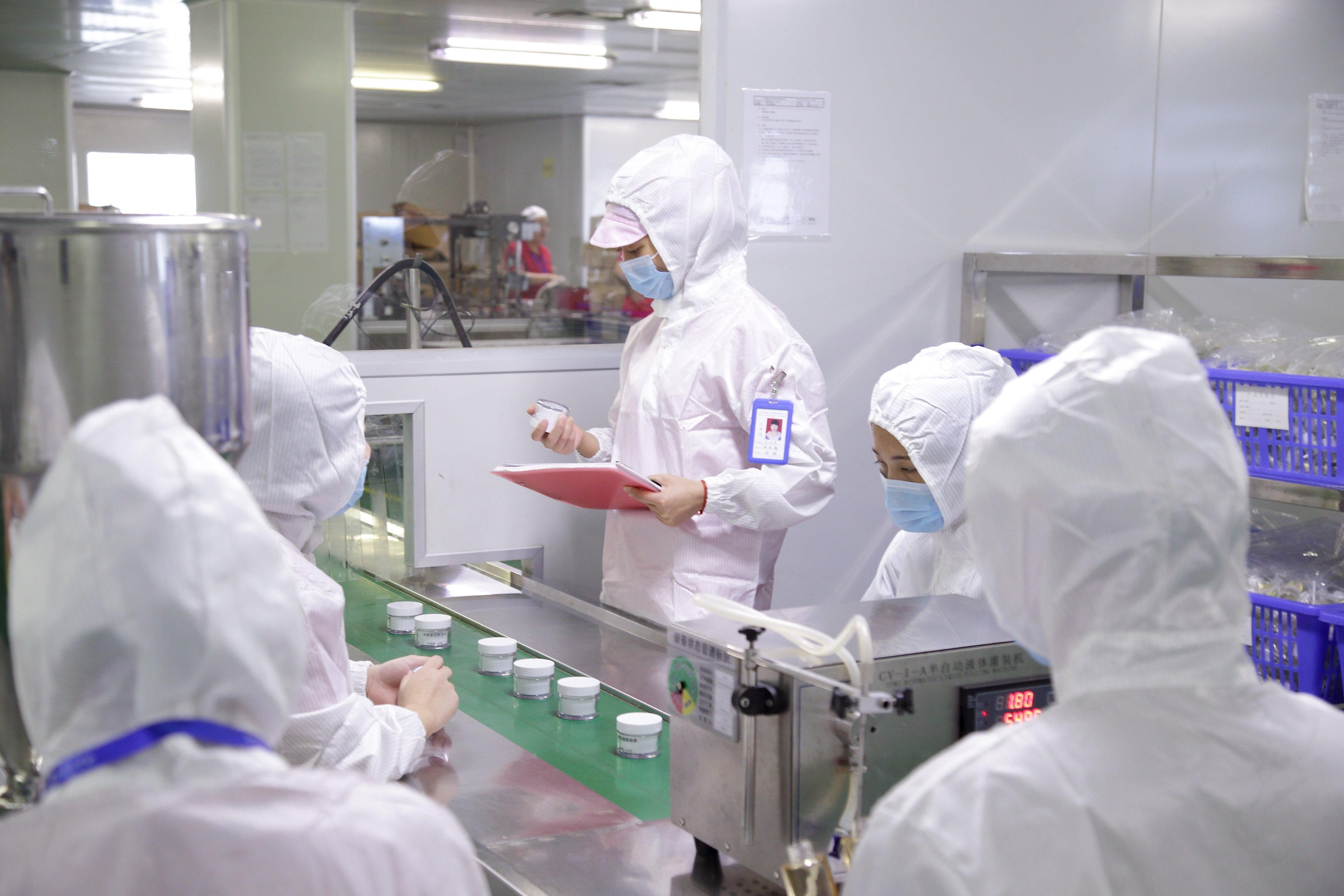
Manufacturing runs across two GMP-certified campuses over 60,000 square meters with 20+ production lines and 100 million units of annual capacity, serving 300+ clients in 50+ countries since 2002. First production takes 20–30 days after approval, with repeat orders as fast as 7–14 days.
The real constraint
Packaging MOQ, not formula MOQ. A filling line can run 500 units profitably; a moulding tool cannot be built for 500 units.
Frequently asked questions
What is the lowest packaging MOQ I can get?
Around 100–500 pieces using stock components with printed labels. Custom moulded components start at roughly 10,000 pieces because of tooling cost.
Can I use my own packaging supplier?
Yes. Many manufacturers will fill components supplied by the brand, subject to a compatibility and quality check. Confirm who bears responsibility for filling losses before the run.
How long does packaging take compared to production?
Longer. Production is 20–30 days; stock components may ship in days, but custom components typically take 30–60 days including tooling and decoration.
Is sustainable packaging possible at small volume?
Partially. PCR plastic and FSC-certified cartons are available at low volume from stock. Refill systems and biodegradable formats usually require custom tooling and carry custom minimums.
Next step
Send the product format and target volume. The reply will state which packaging options are open at that volume, the decoration methods that make sense, and the lead time — before you commit to a component order.
Request a quote · Packaging solutions · OEM manufacturing
Further Reading
- Cosmetic Regulatory Compliance: US and EU Essentials for Brand Owners
- Case Study: From Concept to Shelf — Four Launch Paths We See
Looking for a manufacturing partner? OEM manufacturing, private label ODM, custom formulation — get a quote within 48 hours.