
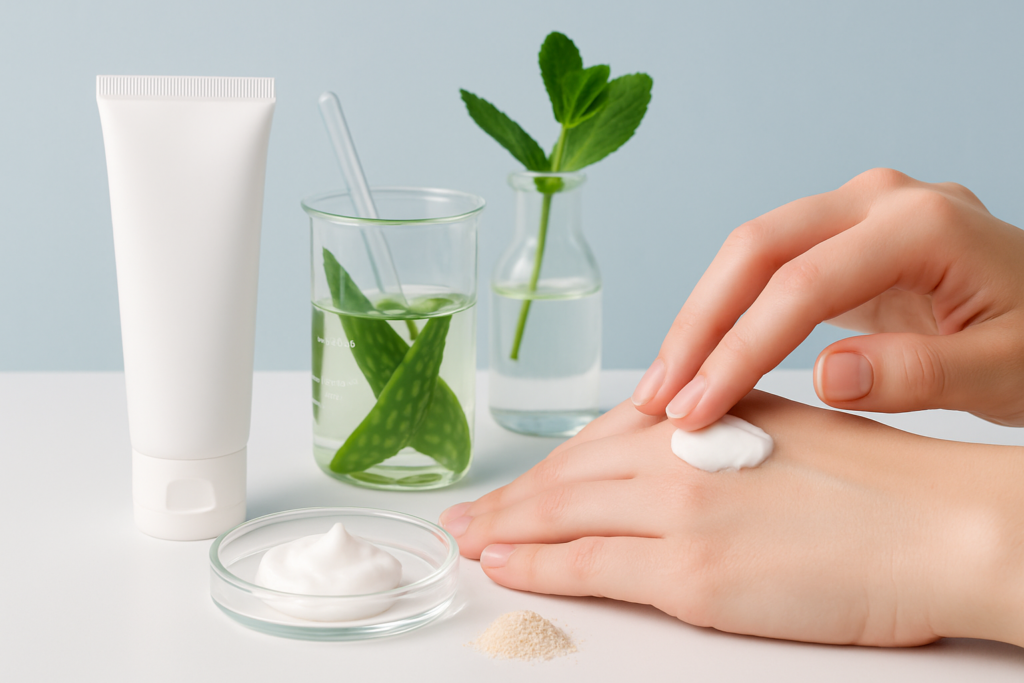
If you are deciding between a hand cream and an ointment for eczema-prone hands, the short answer is this: neither is always better. The right choice depends on how damaged the skin barrier is, how often you wash your hands, whether you need daytime comfort or overnight repair, and which ingredients the formula delivers. In the US market, interest in eczema hand care is rising across Google, Amazon, Reddit, and TikTok, but so is frustration with products that feel too greasy, do not last through handwashing, or fail to calm flare-prone skin. That is why the more useful question is not simply cream or ointment, but what should I look for in the best hand cream for eczema?
For most users, the answer comes down to barrier support, irritation control, and real-world usability. A product can contain excellent ingredients on paper, but if it stings, pills, leaves hands too slippery to function, or gets washed off immediately, adherence drops. From a formulation perspective, that is where the cream-versus-ointment decision matters most.
Understanding the Differences Between Creams and Ointments
Hand creams and ointments differ mainly in their base structure, texture, and how they interact with the skin barrier.
Creams are usually emulsions of water and oil. They tend to feel lighter, spread more easily, and absorb faster. For eczema-prone hands, a well-made cream can deliver humectants and barrier lipids without leaving a heavy film. This matters for people who work, type, drive, cook, or wash their hands frequently.
Ointments are typically more oil-based and contain little to no water. Because of that, they form a stronger occlusive layer on the skin. This helps reduce transepidermal water loss, which is especially useful when the skin is cracked, flaky, or actively inflamed from dryness.
In practical terms:
- Creams are often better for daytime use, repeated application, and people who dislike greasy textures.
- Ointments are often better for severe dryness, fissures, overnight use, and protecting skin in cold or low-humidity conditions.
For eczema-prone hands, the formula matters as much as the format. A cream with colloidal oatmeal, ceramides, and hyaluronic acid may outperform a basic ointment that only seals the skin but does not help replenish it. On the other hand, a simple ointment can still be the better option when the skin barrier is so compromised that almost everything else stings.
That is why dermatology advice often focuses on matching texture to condition severity. Mild to moderate dryness may do well with a barrier-repair cream. More severe hand eczema, especially with cracking, may benefit from an ointment at least part of the day or overnight.
Pros and Cons of Hand Creams
Hand creams are often the first choice for consumers looking for the best hand cream for eczema because they fit daily life better. In a category where dissatisfaction is driven partly by poor user experience, that matters.
Why creams work well for many people
- Faster absorption: Creams usually sink in more quickly than ointments, making them easier to use during the day.
- Better cosmetic feel: Many users prefer a non-greasy finish, especially on hands.
- Easier reapplication: If you need to moisturize after every handwash, a cream is often more practical.
- Flexible ingredient delivery: Creams can combine water-binding ingredients and barrier-support ingredients in one system.
For eczema-prone hands, the strongest cream formulas usually include a mix of:
- Colloidal oatmeal to help soothe itch and support the skin barrier
- Ceramides to replenish barrier lipids
- Hyaluronic acid to attract and hold water in the upper layers of skin
- Glycerin as a reliable humectant for dry, tight skin
These ingredients align with current market demand for fast-acting relief and moisturization, especially in sensitive-skin categories. In OEM development, this is often where brands can differentiate: not by making the heaviest product possible, but by balancing gentleness, efficacy, and repeat use compliance.
Where creams can fall short
- Less occlusion than ointments: A cream may not be enough for deeply cracked or severely chapped hands.
- Can wash off more easily: Frequent handwashing can reduce performance unless the formula has good substantivity.
- Some emulsions sting: If the skin is actively fissured, even a well-formulated cream may cause temporary discomfort.
This is why the best eczema hand creams are usually fragrance-free, sensitive-skin tested, and designed with a low-irritation preservative and emulsifier system. For US brands, this is not just a marketing point. It is a formulation and compliance issue. Consumers in this segment are highly alert to fragrance, essential oils, and unnecessary actives that can worsen reactivity.
From a manufacturing standpoint, cream development also offers room for texture tuning. A factory with experience in sensitive-skin products can adjust viscosity, slip, absorption speed, and after-feel so the product performs well in both a 50 ml travel tube and a 200 ml home format. That matters because packaging and use context influence adherence just as much as ingredient list quality.
Pros and Cons of Ointments
Ointments remain a standard recommendation for eczema because they are very effective at sealing in moisture. When the skin barrier is compromised, reducing water loss is one of the fastest ways to improve comfort.
Why ointments are often recommended for flare-prone skin
- High occlusivity: Ointments create a stronger protective layer than most creams.
- Excellent for cracks and fissures: They help shield damaged skin from further drying.
- Useful overnight: A thick layer under cotton gloves can support recovery while sleeping.
- Often simpler formulas: Fewer ingredients can mean lower irritation risk for some users.
For people with severe dryness, winter-related hand eczema, or skin that reacts badly to many emulsified products, ointments can be the most dependable option. They are especially useful after bathing, after handwashing at home, or before bed, when there is time for a heavier product to sit on the skin.
Where ointments can be difficult to use
- Greasy feel: This is the most common complaint and a major reason people stop using them consistently.
- Interference with daily tasks: Ointments can make it harder to grip objects, use a phone, or type.
- Lower daytime acceptance: Many users reserve them for nighttime only.
- Limited sensory appeal: In a mature market, texture is a real differentiator, and ointments can feel too heavy for broad consumer adoption.
This gap between clinical usefulness and daily acceptance is important. Market signals show strong demand, but also dissatisfaction with existing treatments. In many cases, the issue is not that ointments do not work. It is that consumers do not want to use them often enough. A product that is theoretically effective but practically abandoned will underperform in real life.
That is one reason many brands are moving toward richer cream formats that mimic some of the protective benefits of ointments while improving spreadability and finish. For OEM clients, this creates a clear development opportunity: a fragrance-free barrier cream with colloidal oatmeal, ceramides, and hyaluronic acid that feels comfortable enough for repeated daytime use, while still supporting overnight repair.
When to Choose a Cream Over an Ointment
If your main question is Should I use a hand cream or ointment for eczema? the answer often depends on timing and severity rather than choosing one forever.
Choose a cream when:
- You need something you can apply multiple times during the day
- You wash your hands frequently at work or at home
- You want fast absorption and less residue
- Your eczema is mild to moderate rather than severely cracked
- You are more likely to use a product consistently if it feels light and comfortable
Choose an ointment when:
- Your hands are cracked, raw, or extremely dry
- You need maximum occlusion, especially overnight
- Your skin stings with many cream formulas
- You are in a cold, dry climate or exposed to frequent irritants
For many people, the best approach is not cream or ointment, but cream and ointment used strategically.
- Daytime: Use a barrier-repair hand cream after every wash.
- Nighttime: Apply a thicker ointment or a richer repair cream before bed.
This routine works because it matches product performance to behavior. Daytime products need to fit real life. Nighttime products can focus on maximum repair.
When evaluating the best hand cream for eczema, look for these features first:
- Fragrance-free
- Colloidal oatmeal for soothing support
- Ceramides for barrier repair
- Hyaluronic acid or glycerin for hydration
- Minimal known irritants
- Packaging that supports frequent use, such as a portable 50 ml tube and a larger home size
For brands entering this segment, these are not minor details. They are directly tied to consumer trust. The opportunity data points to a mature market with stable pricing and room for premium positioning around $16 to $20, but only if the product clearly solves common pain points: poor absorption, weak relief, or formulas that feel harsh on sensitive skin.
Expert Opinions on Creams vs. Ointments
Across eczema care, expert guidance tends to be consistent on a few points. First, regular moisturization is essential. Second, thicker products usually provide stronger protection against water loss. Third, the best product is the one the user will apply often enough to maintain the skin barrier.
That last point is easy to overlook, but it is critical. In hand eczema, treatment success depends heavily on repeat application because hands are exposed to soap, water, friction, and environmental stress throughout the day. A technically strong ointment may be ideal on paper, but if the user avoids it because it feels sticky, a well-formulated cream may produce better real-world results.
Formulators and dermatology-focused product developers generally assess eczema hand care through four lenses:
- Occlusion: How well does the product reduce water loss?
- Barrier repair: Does it replenish what damaged skin is missing?
- Irritation risk: Is it suitable for sensitive, flare-prone skin?
- Compliance: Will people actually use it as directed?
That framework explains why cream-versus-ointment discussions are often too simplistic. A strong eczema hand cream can be highly effective if it combines soothing and barrier-repair ingredients with a texture people accept. A basic ointment can be indispensable for severe dryness, but less practical for all-day use.
For OEM and private label brands, this is where scientific efficacy and natural gentleness need to meet. A credible product in this category should be:
- Fragrance-free and designed for sensitive skin
- Built around proven support ingredients such as colloidal oatmeal, ceramides, and hyaluronic acid
- Manufactured with quality and consistency across batches
- Supported by compliant claims language appropriate for the US market
It is also wise to think beyond the formula itself. Packaging compatibility, preservative stability, texture consistency in different climates, and claim substantiation all affect launch success. In a category where consumers are skeptical of overpromising, brands need products that feel immediately comforting and can stand up to scrutiny.
That is why many successful concepts in this space are not trying to replace ointments entirely. Instead, they are offering a better daytime option: a hand cream for eczema-prone skin that absorbs quickly, supports the barrier, and encourages frequent use. Paired with an overnight treatment story, that creates a more believable and more effective regimen.
So, which is better: hand creams or ointments for eczema? For severe dryness and overnight protection, ointments still have a clear role. For daily wear, frequent reapplication, and better user compliance, creams often win. The best solution for eczema-prone hands is usually a barrier-focused routine that uses each format where it performs best.
If you are developing a product for this category, what matters most is not choosing the heaviest texture. It is building a formula that people with sensitive, eczema-prone hands can trust and use consistently. That means proven ingredients, low-irritation design, strong texture work, and packaging that fits real habits.
Our factory develops sensitive-skin hand care with a focus on natural gentleness and scientific efficacy, including fragrance-free cream concepts with colloidal oatmeal, ceramides, and hyaluronic acid in travel and home-size formats. If you are planning an eczema hand cream line for the US market, contact us through our inquiry form to discuss formulation options, sampling, and compliant product positioning.
The section is particularly interesting from a crypto market perspective.
Debt-to-Income Ratio Calculator