
You have a formula, a brand name, and no revenue. You send it out for quotes and the numbers come back at 5,000 units, sometimes 10,000. It reads like the factory is pricing you out on purpose. It usually isn’t. A cosmetic MOQ is not a negotiating position dressed up as a number — it is the output of three separate manufacturing constraints, and the one you are arguing about is almost never the one setting the figure.
What indie founders actually say
“some of them are quoting 5000 MOQs. This is quite large for a start up of our size that has 0 revenue yet”
a founder on r/Entrepreneur
“How can we negotiate to get this lower to like 100, given that we don’t have much purchasing and negotiating power”
the same thread
This exchange plays out weekly, and the reasoning behind it is understandable: in most industries, a quoted minimum is the opening bid in a negotiation. Cosmetics manufacturing is not most industries. The founder is treating 5,000 as a price. The factory is treating it as a purchase order it has to place with somebody else. Until those two framings meet, every conversation stalls in the same place.
Where the number actually comes from
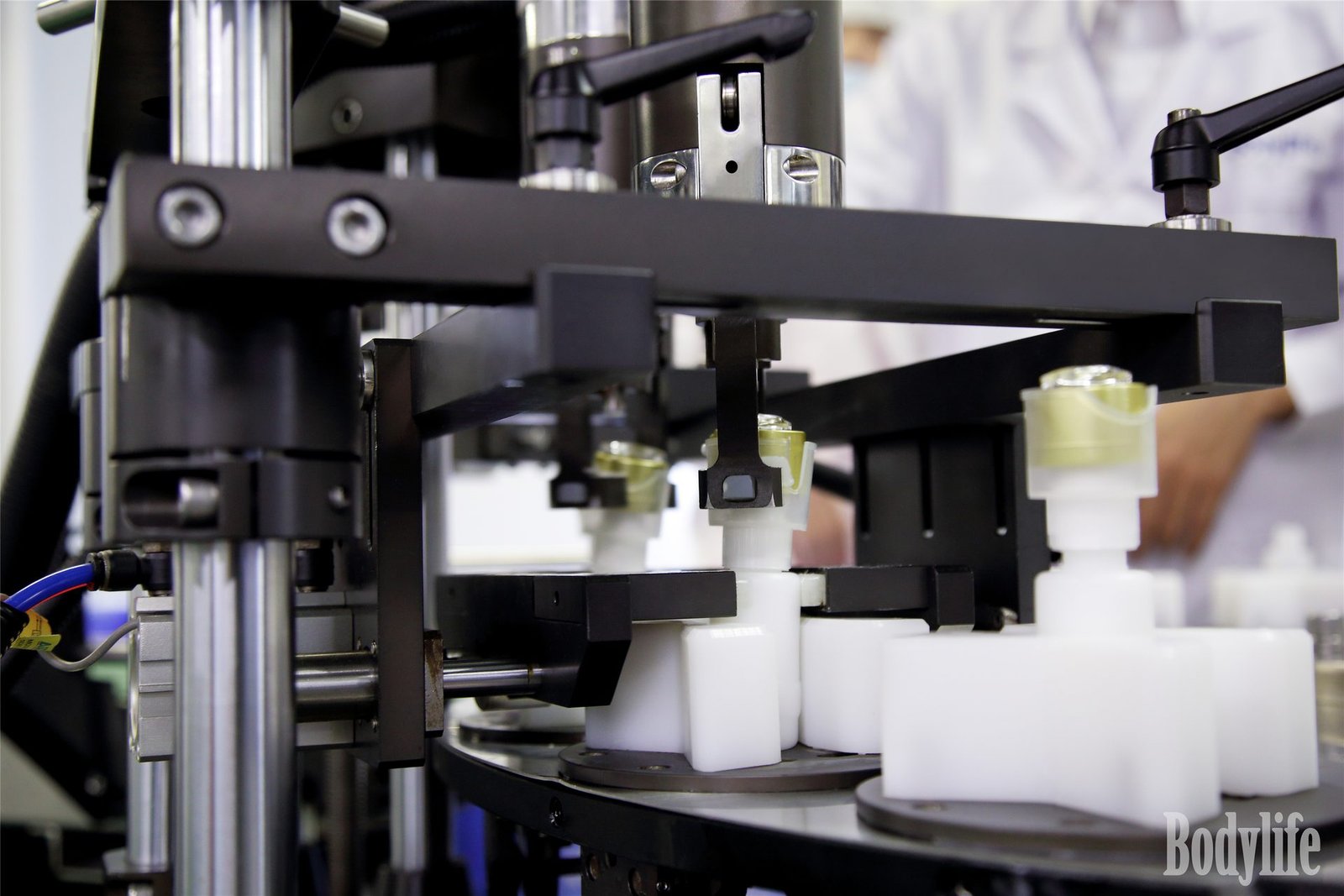
A quoted MOQ is the maximum of three independent constraints, not a single decision. The first is the minimum batch a mixing vessel can produce and still yield valid stability data — you need enough product in the tank for the homogeniser to actually work, and enough left over to fill stability, microbiology and challenge-test samples that sit for months. The second is the minimum print run your packaging supplier will accept. The third is the changeover cost of cleaning and re-setting the filling line: the downtime, the flush material, the line clearance documentation. The factory quotes whichever of those three is highest, because that is the point below which the job stops being economic for the plant.
Here is the part that surprises people: the filling line is usually not the binding constraint. On a modern line, cleaning and re-setting between runs is measured in hours, and a few hundred units can absorb that cost. Packaging almost always sets the floor. Your bottle, pump, cap and printed carton are made by a completely different factory with its own minimum order, and that minimum is fixed before your formula is even mentioned in the conversation. A stock bottle in a stock colour has a low minimum because the moulder already runs it. A custom mould has a minimum in the tens of thousands, because somebody has to cut a tool. A printed carton has a minimum set by the sheet size on the press and the setup waste on the run.
This is why negotiating harder fails. When you push on the 5,000, you are arguing about fill quantity. The factory is calculating from a purchase order it has to place with a packaging supplier that will not move either — the moulder’s minimum is the moulder’s minimum, and your contract manufacturer has no more leverage over it than you do. The person across the table is not refusing to discount. They are doing arithmetic on a constraint that sits upstream of the conversation you are trying to have.
There is a second mechanism worth knowing, because it explains why the number sometimes looks arbitrary. Stability and microbiological testing are run on the batch, not on the units you sell. A batch that is too small to draw valid samples from is a batch whose shelf life you cannot defend on a CPSR or a CPNP notification. So the mixing minimum is not about waste — it is about whether the product can legally and safely be sold at all. That floor does not move with charm or volume promises. It moves with formulation and vessel selection.
The practical lever, then, is packaging selection, not price pressure. Stock moulds, stock colours and label-applied decoration move the number far more than any discount conversation, because they attack the constraint that is actually binding. A label on a stock bottle has no tooling cost and a low print minimum. A custom-coloured pump has both. Founders who understand this stop negotiating and start choosing — and the quote changes accordingly. If you want to see how the split works in practice, the breakdown of low-MOQ manufacturing is a useful starting point.
What this means if you are launching a brand
You cannot negotiate your way past a packaging minimum, but you can design around it. A few implications worth internalising before you send the next email:
- Ask the factory to break the quote down into fill minimum, packaging minimum and changeover. If they cannot or will not, you cannot tell which lever to pull.
- Assume the packaging minimum is the real number until proven otherwise, and choose stock components first. Custom moulds are a second-order decision, made once you have revenue.
- Stop treating MOQ as a price. Treat it as a bill of materials with three line items, one of which you control through design.
- Do not promise a launch date before the packaging-versus-fill split is visible. Packaging lead times are longer than fill lead times, and they are the ones that slip.
- If a supplier quotes 100 units on a custom bottle, ask which packaging supplier is absorbing the difference — because someone is, and it will reappear in the unit price or the lead time.
How we approach it
BodyLife has been operating for 25 years, since 2002, across two GMP-certified plants totalling more than 60,000 m² and 20+ production lines. The approach to small first orders is structural rather than a concession:
- OEM minimum order of 500 units, with stock packaging sized to support small first runs — so the packaging minimum and the fill minimum are matched from the start rather than negotiated separately.
- A library of 500+ ready-to-launch formulations, so a first order does not carry a formulation development timeline. Custom formulation, where needed, takes 3–6 months with the development fee credited against the first order.
- Packaging sourced as part of the same project, including PCR material options, from a base of 1,000+ verified raw material suppliers.
- Quotation within 48 hours, so the packaging-versus-fill split is visible before a launch date is committed.
- In-house R&D laboratory covering formulation, stability, microbiology and heavy metals; every batch tested with a certificate of analysis issued and full chain traceability.
- Sampling in 7–10 days, first order in 20–30 days, reorder in 7–14 days. Payment terms 30/70 or 40/60. Annual capacity of 100M+ units, scalable from 500 to 100,000+.
We hold eight certifications — GMP, ISO 22716, ECOCERT, COSMOS, FDA, SMETA, CPNP and CPSR — and serve 300+ active clients across 50+ countries. Much of that work is manufacturing for indie and DTC brands, where the first order is small by definition. If your launch is a private label face cream, the packaging decision will drive your MOQ more than the formula will. Gentle formulation is our DNA; so is telling you which number is actually fixed.
Frequently asked questions
Is a 5,000-unit MOQ negotiable?
Usually not, because the number is not a margin decision. It is the maximum of three constraints: the minimum viable mixing batch for valid stability data, the packaging supplier’s minimum print or mould run, and the filling line’s changeover cost. You can negotiate the third and occasionally the first. The second belongs to a different factory. Ask for the breakdown before you ask for a discount.
Why is packaging usually the real minimum?
Bottles, pumps, caps and printed cartons are made by separate suppliers with their own minimums, set by tooling cost, press sheet size and setup waste. Those minimums are fixed before your formula enters the conversation, and your contract manufacturer has no more leverage over them than you do. Stock moulds, stock colours and label-applied decoration are what move the number down.
Can I start with 500 units and scale?
Yes, provided the packaging is chosen to support it. BodyLife’s OEM minimum is 500 units with stock packaging sized for small first runs, scaling to 100,000+. The constraint to watch is packaging lead time rather than fill capacity — stock components keep both in range, and reorders run in 7–14 days once the components are established.
Does a smaller first run cost more per unit?
Yes. Setup, cleaning and line clearance are fixed costs spread across the batch, so a 500-unit run carries a higher per-unit share than a 50,000-unit run. That is arithmetic, not penalty pricing. The trade is cash and risk: a smaller first order lets you validate sell-through before committing capital to packaging and inventory you may not move.