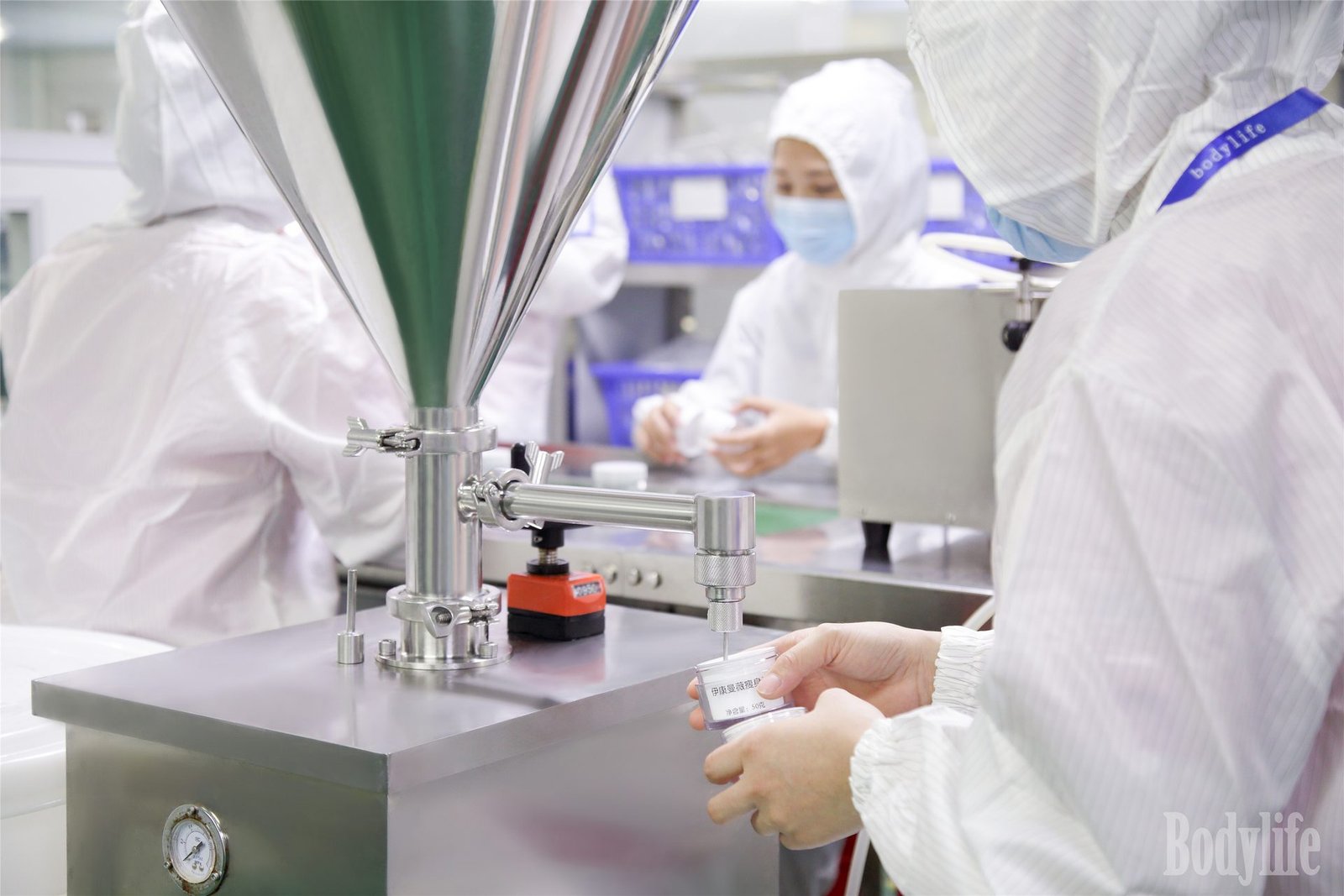
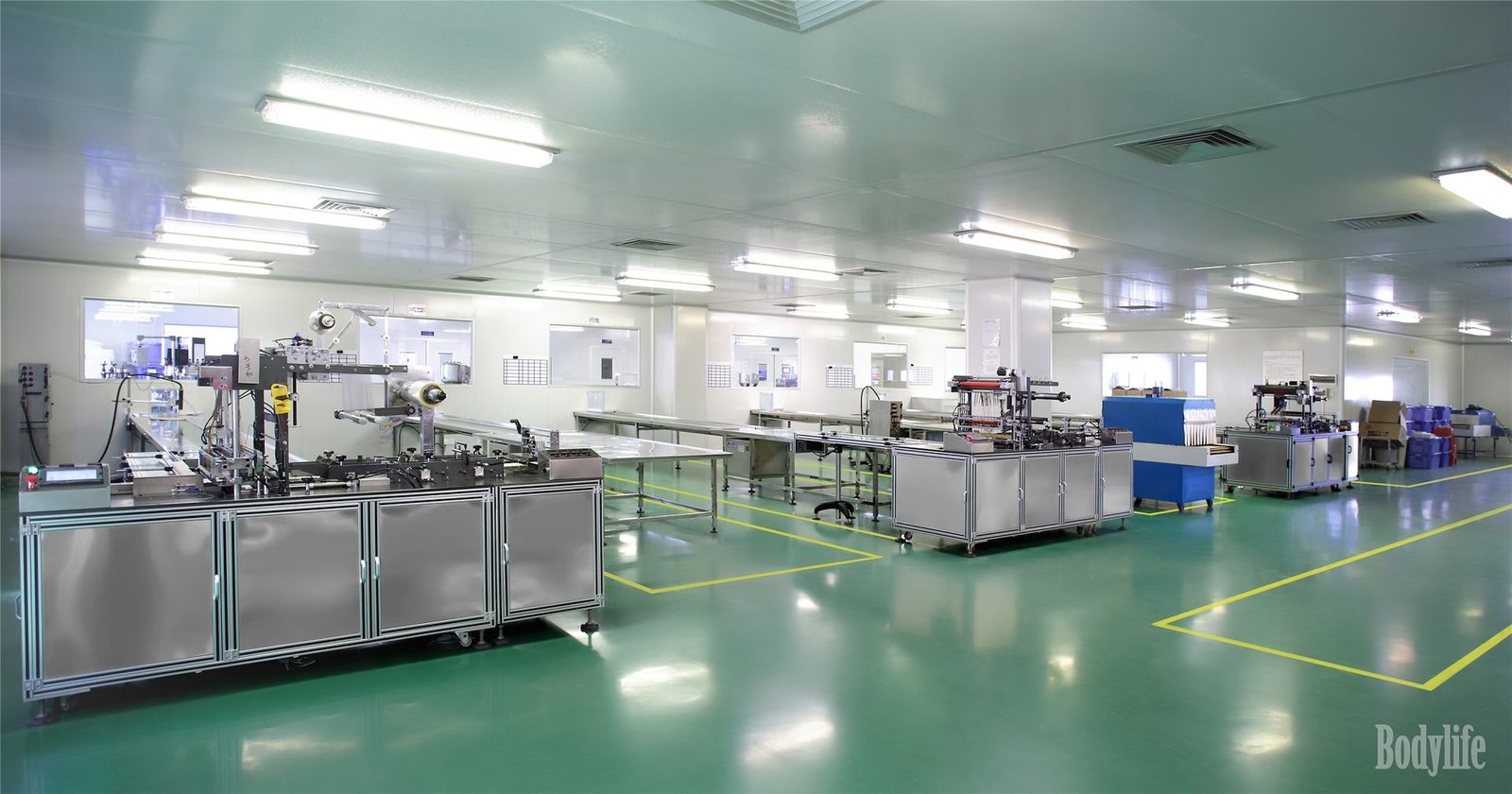
Low MOQ cosmetic manufacturing means a factory will run your batch below the industry default — not that it will run it badly. At BodyLife Global the floor is 500 units per SKU, and the reason we can go that low is not charity: it is 20+ production lines across two GMP sites, which lets a small batch take a short slot instead of waiting for a full line changeover.
Most factories quote a 3,000-unit minimum because a short run carries the same fixed cost as a long one: cleaning the line, verifying the fill weight, running stability, issuing a COA. Below a certain volume the per-unit price stops making sense for them. The question for a new brand is not “who has the lowest minimum” — it is “what does the minimum actually include, and what does unit cost do at that volume”.
| Manufacturer type | Cosmetic OEM / ODM / private label manufacturer |
| Location | China — two GMP-certified sites, 60,000+ m² total |
| Capacity | 100M+ units per year across 20+ production lines |
| Minimum order | 500 units per SKU (startup band 500–1,000; standard 3,000) |
| Sampling | 7–10 days from approved brief |
| First production | 20–30 days after sample approval; reorders 7–14 days |
| Quote turnaround | Within 48 hours |
| Certifications | GMP, ISO 22716, ECOCERT, COSMOS, FDA, SMETA, CPNP, CPSR |
| Testing | Every batch tested, COA issued, full batch traceability |
| Clients | 300+ active brands across 50+ countries, since 2002 |
| Colour cosmetics | Foundation and pressed powder only — not eyebrow pencils or eyeshadow |
What “low MOQ” actually means in cosmetics
The number a factory quotes is rarely one number. It is usually three, and they apply to different things:
1. Formula minimum
The smallest batch the mixing vessel can produce while still hitting the formula’s tolerance. A 500 kg tank cannot make 50 kg of emulsion accurately — the shear and the cooling curve stop behaving the same way. This is a physical floor, not a commercial one.
2. Fill minimum
The smallest run the filling line will accept. This is driven by changeover time: cleaning, calibrating fill weight, and validating the first units off the line.
3. Component minimum
The smallest order your packaging supplier will accept. This is frequently the real blocker — a custom-moulded jar may carry a 5,000-piece minimum even when the formula minimum is 500.
The practical consequence: a brand can be told “500 unit MOQ” and still discover the project needs 5,000 units of packaging. Always ask which minimum you are being quoted.
Where unit cost actually jumps
Low MOQ is not simply a higher price per unit — it is a different cost structure. Four cost lines behave differently at small volume:
- Raw material purchasing. Most ingredients are sold in drum quantities. A 500-unit run may use 2 kg of a 25 kg drum — you pay for the drum, and the remainder is either carried or written off.
- Line time. Changeover, cleaning and first-off validation are fixed hours regardless of batch size. Spread over 500 units instead of 50,000, that cost per unit is 100×.
- Testing. Stability, microbiology and challenge testing cost roughly the same whether the batch is 500 or 50,000 units. This is the single largest per-unit penalty at low volume.
- Components. Small component orders lose volume pricing and often pay setup fees on decoration (printing, hot-stamping, spraying).
What a 500-unit MOQ realistically looks like
Based on how BodyLife Global actually runs these projects — not a general industry figure:
- 500 units is achievable for skincare and body care in stock or semi-custom packaging. It is the startup floor.
- 1,000 units is the more common startup volume, because it spreads the fixed testing cost better and usually unlocks better component pricing.
- 3,000 units is the standard production minimum where unit economics become normal rather than penalised.
- Custom-moulded packaging moves the floor up regardless of formula — the mould, not the batch, sets the number.
- Colour cosmetics is narrower than most buyers assume. We produce foundation and pressed powder. We do not produce eyebrow pencils or eyeshadow — those require different tooling and are outside our capability. Do not let a supplier imply “full colour cosmetics” without naming the specific formats.
The questions that reveal the real minimum
Ask these before accepting any MOQ quote. A supplier who cannot answer them precisely is quoting a number they have not verified:
- “Is this the formula minimum, the fill minimum, or the component minimum?” — Three different numbers, often three different answers.
- “What is the unit cost at 500 versus 3,000?” — If they will not put both in writing, the 500 figure is not real.
- “Does the minimum include stability and microbiology testing?” — Frequently excluded, and it is the largest fixed cost at low volume.
- “Which components are stock and which are custom?” — Stock packaging is what makes a 500-unit run possible at all.
- “What is the sampling lead time and is the sample fee credited to the order?” — At BodyLife sampling runs 7–10 days and the development fee offsets the first order.
- “If I reorder, does the minimum change?” — Reorders typically run faster (7–14 days at BodyLife) because the formula and components are already validated.
Why a factory would offer a low minimum at all
A low minimum is a scheduling decision, not a pricing strategy. A factory with spare line capacity between large orders can slot in a small batch; a factory running at full capacity cannot, and will quote a high minimum specifically to make you go away.
This is why the same “500 unit MOQ” can be genuine at one supplier and fictional at another. The test is whether they can give you a production date, not just a number.
Frequently asked questions
Is a 500-unit MOQ actually profitable for a factory?
Rarely on its own. It is viable when the factory has line capacity to fill and when the brand is expected to reorder. Treat a low first-order minimum as an investment the supplier is making in the relationship — and expect the unit price to reflect that.
Can I get a lower MOQ by supplying my own packaging?
Sometimes, because you remove the component minimum. But you also take on component quality risk: if the pump fails, the batch is still yours. Make sure the factory will still run fill-weight and compatibility checks on customer-supplied components.
Does low MOQ mean lower quality?
No — it means higher unit cost. The batch still goes through the same GMP records, the same testing and the same traceability. What changes is how the fixed cost is spread, not how the product is made.
What is the realistic timeline for a first low-MOQ order?
At BodyLife Global: sampling 7–10 days, first production 20–30 days after approval, reorders 7–14 days. Add time for packaging if components are custom.
Do you work with brands that have never launched before?
Yes — the startup band of 500–1,000 units exists for exactly that. What we will not do is pretend a first-time brand with no formulation should skip sampling. Custom formulation runs 3–6 months.
Next step
If you need an actual number rather than a range, send the format, the fill size and the target volume. Quotes come back within 48 hours. Request a quote · OEM manufacturing · Private label ODM · About BodyLife Global
Further Reading
- Cosmetic Packaging MOQ: How Small Brands Should Plan
- GMP and ISO 22716: What They Mean for Your Brand
- Custom Formulation: From Brief to Bulk in 6 Steps
- Launching a Skincare Brand: Timeline and Cost
- Cosmetic Manufacturer for US Brands: Compliance Checklist
- Skincare Manufacturing Partner for DTC Brands