You can hold one formula in your hand, sell the same bottle in five countries, and still get stopped at four borders. Not because the product is wrong — because the paperwork that proves who is accountable for it changes with every jurisdiction, and most suppliers can only produce one version of that paperwork. The distributor who discovers this after the order ships is the one who eats the demurrage.
What distributors and importers actually say
“I think I understand the custom process except for the FDA requirements regarding with this. What other additional information do i need”
An importer on r/importexport
“My custom broker wont explained to me because he has a business to run. Im trying to do it myself to save money”
The same thread, on the information gap around clearance
These two quotes are the same problem stated twice. The first is a person who has done the work and hit a wall they did not know existed. The second explains why the wall stays up: the people who could explain it are paid by the hour and have no incentive to teach a competitor. The information asymmetry is not accidental. It is the business model of every intermediary in the chain. What follows is the part your broker would charge you to hear.
Where the number actually comes from
There is no international cosmetics registration. This is the single fact that reorganises everything else. No treaty, no harmonised filing system, no mutual recognition agreement covers cosmetics the way it covers, say, pharmaceutical dossiers or CE marking. Every market has built its own accountability structure, and those structures do not talk to each other. The EU requires a responsible person established inside the union — a legal entity, not a mailbox — who holds a safety assessment and a product information file that must be producible on demand for a decade after the last batch leaves the shelf, plus notification of the product before it goes to market. The United States, under MoCRA, requires facility registration and product listing, with no pre-market approval but full traceability from ingredient to finished unit. The Gulf and much of Southeast Asia commonly want a certificate of free sale from the country of origin plus labelling in the local language. Same bottle. Five different answers to the question “who is on the hook, and what can they show me?”
None of that is about the formula. Read the requirements again and notice what is missing: nobody in that list is asking whether your emulsifier is stable or your preservative system is adequate. They are asking who is legally accountable in their jurisdiction and what evidence that person can produce when an inspector, a customs officer or a safety assessor requests it. The formula is the manufacturer’s problem. The accountability structure is the brand’s or importer’s problem, and it is jurisdiction-specific by construction. This is why a product that sails through the EU can sit in a US customs bond for weeks — not because anything about it changed, but because the evidence chain the US authority wants is a different chain.
Here is the mechanism most people outside the industry never see. The documents follow the facility, not the product and not the brand. A certificate of free sale is issued against a manufacturing site, in the name of the entity that operates it, by the authority of the country where that site sits. A GMP certificate names a plant and a scope. A safety assessment is written against a specific formulation produced at a specific facility. When you change manufacturers, you do not carry your paperwork across — you orphan it. The new supplier’s certificates exist at the new supplier’s name, cover the new supplier’s scope, and have been accepted (or not) in whatever markets that supplier has actually shipped to. This is the reason multi-market distribution fails at the documentation layer long before it fails at the product layer, and why switching factories rarely fixes a registration problem. If a supplier cannot support one market, it usually cannot support five, because the underlying capability — a facility dossier that has already been exercised and accepted — is not something you can add by asking nicely. It is accumulated by shipping.
So the useful filter when you are choosing a manufacturer is not the catalogue. Catalogues are cheap and every factory has one. The filter is the facility dossier: which certificates exist, at whose name they are issued, what scope each one covers, and in which markets those certificates have already been accepted by an authority or a customs broker. Ask for the certificate numbers and the issuing bodies, not a logo wall. Ask which countries have already cleared your intended product category from this facility. A supplier that has shipped to fifty countries has a documentation department that has been punched in the face by fifty different customs regimes and learned the shape of each punch. A supplier that has shipped to two has a folder and good intentions. The difference shows up on day one of your first multi-market launch, not in the sample.
What this means if you are a distributor
- Map the accountability requirement per market before you map the product. For each target country, write down who must be legally established there, what file must exist, and what certificate must be produced on request. That list, not the formula, determines your launch sequence.
- Ask for the facility dossier during supplier selection, not after the PO. Certificate numbers, issuing bodies, scopes, and a list of markets where they have already been accepted.
- Separate formula problems from paperwork problems early. A stability failure is a formula problem and the factory fixes it. A customs hold on a missing certificate of free sale is a paperwork problem and no amount of reformulation will touch it. Confusing the two wastes months.
- Budget for the EU responsible person as a real line item. It is a legal entity requirement, not a form you download.
- Keep the product information file retrievable for the full retention period. Ten years is longer than most distributor relationships last, which is exactly why it needs to live somewhere institutional.
- If you are assembling a multi-market range, favour suppliers whose certificates already cover your target list. Every market you add that the facility has not shipped to is a new documentation project.
If you are building a distribution business around imported cosmetics, the operational detail sits in manufacturing for distributors and importers, which is written from the buyer’s side of the desk rather than the factory’s.

How we approach it
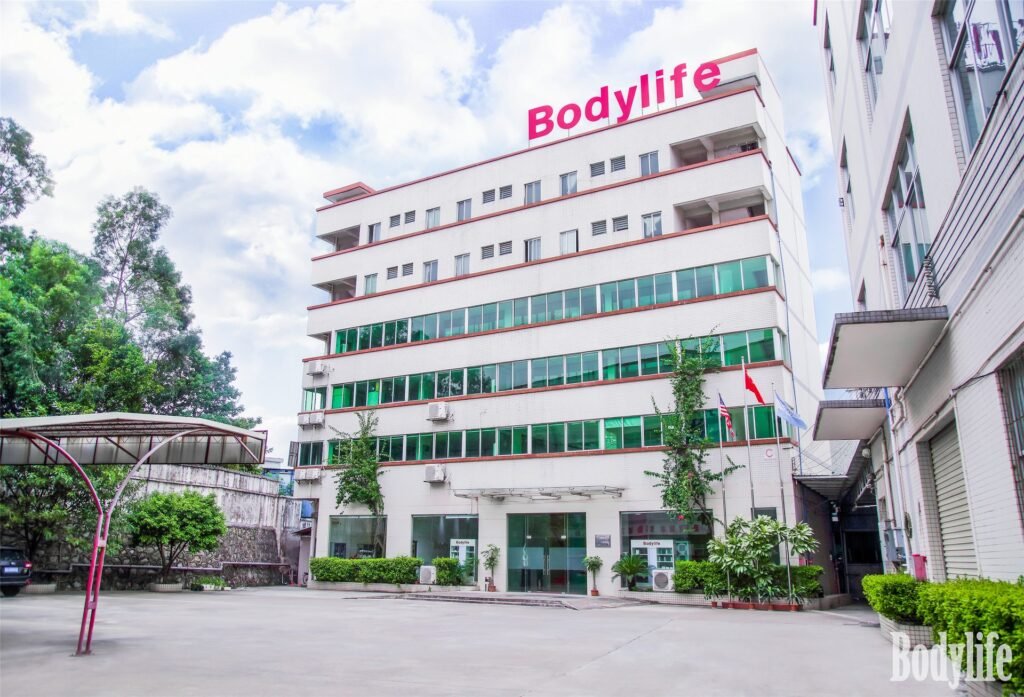
BodyLife has operated since 2002 and holds eight certifications at facility level: GMP, ISO 22716, ECOCERT, COSMOS, FDA, SMETA, CPNP and CPSR. Those are issued against the plants, not against individual orders, which is what makes them usable as a starting dossier rather than a per-shipment formality. The full scope of each is set out on our certifications page.
- Two GMP-certified plants, 60,000+ m² combined, with 20+ production lines and annual capacity above 100 million units.
- Export experience across 50+ countries with 300+ active clients — meaning the documentation set has already been exercised and accepted in those markets, not drafted in anticipation of them.
- Every batch tested with a certificate of analysis issued and full chain traceability retained. This is the same evidence a safety assessor and a customs authority both ask for, which is why it is produced as standard rather than on request.
- A 500+ formulation library, so a multi-market catalogue can be assembled from proven bases instead of developed SKU by SKU. For example, a private label face cream can be matched to an existing base and adapted for labelling per market rather than formulated five times.
- In-house R&D laboratory covering formulation, stability, microbiology and heavy metals — the tests that generate the data your safety assessment depends on.
- 1,000+ verified raw material suppliers, with OEM minimum order from 500 units scaling to 100,000+, quotation within 48 hours, sampling in 7–10 days, first order in 20–30 days and reorder in 7–14 days.
- Custom formulation in 3–6 months with the development fee credited against the first order.
Frequently asked questions
Is there a global cosmetics registration?
No. There is no international registration system for cosmetics and no mutual recognition between the major markets. Each jurisdiction sets its own accountability requirement, its own evidence standard and its own notification or listing process. A product sold in five markets will typically generate five separate documentation sets, even where the formula is identical.
What does the EU require?
A responsible person established within the union, a safety assessment, and a product information file retained and producible for ten years after the last batch is placed on the market, plus notification before sale. The responsible person is a legal entity requirement, not a formality — it determines who answers to the authority. None of this is a pre-market approval; it is an accountability and evidence structure.
What does MoCRA require in the US?
Facility registration and product listing, with full traceability and no pre-market approval. The emphasis is on knowing where a product was made, by whom, and being able to trace it. In practice this means the facility’s registration status and the batch records behind each shipment carry the weight, which is why a supplier that cannot produce batch-level traceability cannot serve the US market regardless of formula quality.
Can one factory support five markets?
It can, if its facility dossier already covers those markets and has been accepted there. The limiting factor is not production capacity but documentation: certificates exist at the facility’s name and cover a defined scope, and they do not transfer if you change supplier. That is why the right question is which markets a factory has already shipped to and cleared, not which markets it would like to serve.