

The quote says $100. The bank account says $260. Nobody lied — you were quoted FOB, and FOB is the price at the factory gate, not the price of getting product onto your shelf. The gap between those two numbers is where distributor margins go to die.
What distributors and importers actually say
“if a sample product cost $100 on Alibaba, the final landed cost might look more like: Product $100 / Shipping (air freight) $60 / Customs + handling $25 / Local…”
— a commenter on r/supplychain breaking down an import
“Don’t be penny wise and dollar foolish. One or two fines, penalties or lost shipments wipe out all the money you ‘saved'”
— a reply on the cost of doing customs paperwork badly
Both comments describe the same failure from opposite ends. The first is arithmetic — the multiplier nobody put in the spreadsheet. The second is the tail risk that sits on top of the arithmetic. Distributors keep hitting this because the supply chain hands them a single clean number at the start (FOB) and a scatter of invoices at the end (freight forwarder, customs broker, port authority, trucker, insurer), and nobody reconciles the two until the margin is already gone.
Where the number actually comes from
FOB means Free On Board: the seller’s obligation ends when the goods are loaded at the origin port. Everything after that point is yours, and it arrives as separate invoices from separate parties. Ocean or air freight is one line. Marine insurance is another. Duty is another. Customs clearance — the broker’s fee, the entry filing, any examination charges — is another. Terminal handling and port fees at destination are another. Inland haulage from port to your warehouse is another. If you import into a market with a value-added tax or goods and services tax, that is another line again, and it is usually payable at clearance before you have sold a single unit. A freight quote typically itemises the freight and gestures vaguely at “destination charges.” That vagueness is where your margin lives.
Duty is the line that breaks the model, because people assume it is a rate. It is not a rate. It is a classification. Your product gets an HS code, and the HS code is determined by what the product is and what it is made of — not what it is called on the marketing page. A body butter in a jar, a body butter in a tube, and a body butter sold as part of a kit can land in different classifications. Formulation matters too: the carrier substance, the presence of alcohol, whether the product is classed as a cosmetic or a drug in the destination market. Get the classification wrong and the duty rate is wrong, and the error compounds because the same wrong code gets reused on every subsequent shipment until an auditor finds it. On top of the base rate, some markets apply additional tariffs — anti-dumping duties, Section 301-style surcharges, safeguard measures — which are layered on the base rate and change with political weather rather than with your product.
Here is the mechanism most first-time importers do not know: the cost that hurts most is rarely overpaying freight. Freight is visible, comparable, and negotiable. The cost that hurts is a documentation hold at clearance. When the commercial invoice, packing list, certificate of origin, ingredient declaration or safety documentation does not reconcile with what the broker filed, the shipment does not get a higher bill — it gets stopped. Stopped means demurrage and detention accruing daily at the port, storage charges at the terminal, and a container sitting in a queue while your retail launch date walks past. A two-week hold on a seasonal SKU does not cost you freight. It costs you the window, which converts into a markdown, a cancelled purchase order, or a competitor’s product on the shelf where yours was supposed to be.
This is why the practical rule is to model landed cost before you set a price, not after. The FOB quote is an input to the calculation, not the answer to it. Build the model with every line itemised — freight, insurance, duty at the correct classification, clearance, port handling, inland delivery, tax — and add a contingency for the delay scenario, because the delay scenario is not hypothetical. Then price the product. Distributors who price off FOB and discover landed cost later are not unlucky; they ran the calculation in the wrong order.
What this means if you are a distributor or importer
- Ask for a cost breakdown, not a price. A supplier who can only give you one number is handing you a number you cannot model.
- Confirm the HS classification before you commit to volume, and confirm it in writing with your broker. The classification drives the duty rate, and the duty rate drives your margin.
- Budget the tax line separately. VAT or GST at import is a cash-flow event, not a cost you can net out later.
- Treat documentation as a cost centre with a return. Clean paperwork is cheaper than demurrage, and demurrage is cheaper than a missed retail window.
- Model two scenarios: a clean clearance and a two-week hold. If the second one kills the deal, the deal was priced wrong.
- When you compare suppliers, compare landed cost at the same classification, not FOB at the same unit price. The cheaper FOB quote is frequently the more expensive import.
If you are sourcing across a range of categories, the same discipline applies per SKU. A private label body butter and a shampoo may share a freight container but not a duty rate, and the blended margin hides which one is actually working.
How we approach it
We manufacture for importers, so the quotation we send is built to be modelled rather than guessed at. Concretely:
- Quotation within 48 hours, with the cost structure visible so you can build a landed cost model rather than reverse-engineer one from invoices.
- Full ingredient and composition documentation — the input that HS classification and customs clearance actually depend on, supplied as standard rather than on request.
- Facility certifications including GMP, ISO 22716, FDA, CPNP and CPSR, which reduce the probability of a documentation hold at clearance. You can review the full list on our certifications page.
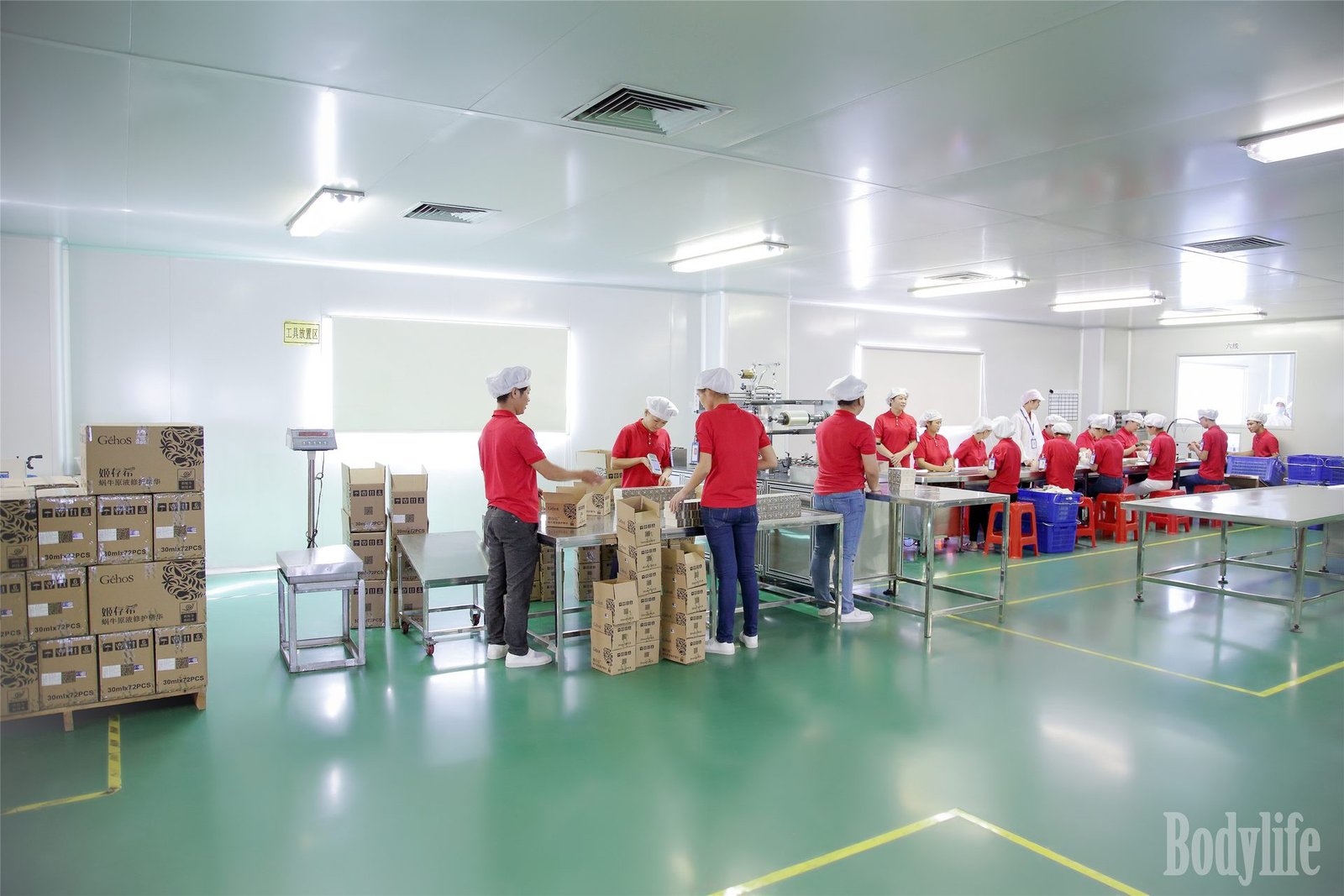
- Two GMP-certified plants totalling 60,000+ m², 20+ production lines and annual capacity of 100M+ units — which means volume pricing steps exist, and those steps are one of the few levers that can genuinely offset freight cost per unit.
- 25 years in operation, 300+ active clients across 50+ countries, and 1,000+ verified raw material suppliers with full chain traceability and a certificate of analysis on every batch.
- OEM minimum order from 500 units, scalable to 100,000+, with sampling at 7–10 days, first orders at 20–30 days and reorders at 7–14 days.
We also work with distributors who carry multi-category ranges — the manufacturing for distributors and importers model is built around that, including packaging sourced in one place, PCR material where you need it, and stock packaging that supports smaller opening orders while you test a market.
Frequently asked questions
What is landed cost?
Landed cost is the total cost of getting a unit into your warehouse, ready to sell. It starts with the FOB price at the factory gate and adds freight, insurance, duty, customs clearance, port handling, inland delivery and any import tax payable at clearance. It is the only number you can safely set a retail price against.
Why does duty vary?
Duty is set by HS classification, which depends on what the product is and what it is made of, not what it is marketed as. Different compositions and pack formats can fall into different classifications with different rates. Some markets also apply additional tariffs on top of the base rate, so the same product can attract a different total duty in different destinations.
What documents does customs need?
Typically a commercial invoice, packing list, bill of lading or airway bill, certificate of origin, and product documentation covering composition and safety. The exact set depends on the destination market and the classification. The common failure is not a missing document but documents that do not reconcile with each other — which is why composition documentation has to be accurate at the point of manufacture.
How do I reduce landed cost?
Model it before pricing, so you are optimising the real number rather than the FOB number. Confirm the HS classification in advance so you are not overpaying duty. Consolidate shipments to reduce per-unit freight. And use volume pricing steps to offset freight — at our capacity, those steps exist and are worth negotiating against.