
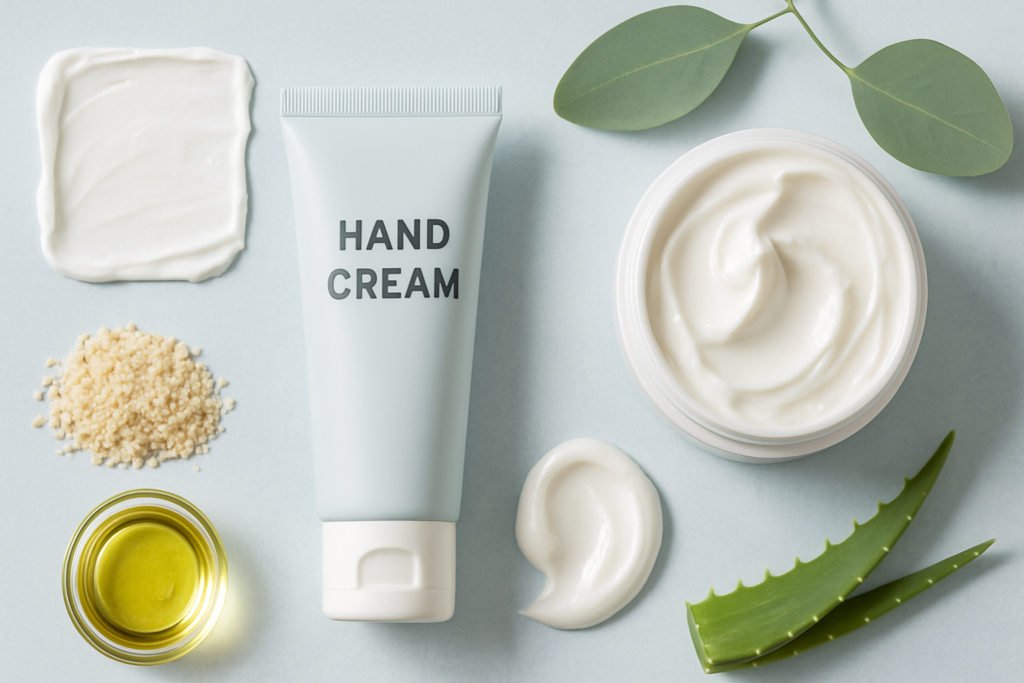
If you have eczema, choosing between a hand cream and a body cream can feel more complicated than it should. The labels may look similar, but the skin on your hands behaves very differently from the skin on your arms, legs, or torso. Hands are washed more often, exposed to soap, sanitizer, cold air, and friction, and they tend to lose moisture faster. That means a product that works well on the body may not always be enough for eczema-prone hands.
For brands and buyers in the US sensitive-skin market, this distinction matters. Consumer demand for effective eczema solutions is rising across Amazon, Google Trends, Reddit, and TikTok, with 21 source signals across 4 platforms pointing to strong interest and clear dissatisfaction with products that do not deliver lasting relief. In a mature category where pricing is relatively stable, the products that stand out are the ones that match real use cases: fast-absorbing hand care for frequent reapplication, and richer body care for larger dry or irritated areas.
So, what is the actual difference between hand cream and body cream for eczema? The short answer is this: neither is automatically better. The best choice depends on where your eczema appears, how often that skin is exposed to irritants, and whether you need quick daytime comfort, overnight repair, or both. Here is how to choose the best hand cream for eczema and when a body cream may still be the right option.
Understanding Eczema: Hand vs. Body
Eczema is not one-size-fits-all, and neither is moisturizer selection. While the same person may have eczema on both the hands and body, the triggers and daily stress on those areas can be very different.
Hand eczema is often aggravated by repeated washing, alcohol-based sanitizers, detergents, weather exposure, and contact with surfaces throughout the day. The skin barrier on the hands is under constant pressure. As a result, people often describe symptoms such as:
- Cracking around the knuckles and fingertips
- Stinging after washing
- Rough, thickened patches
- Redness that flares quickly after exposure to soap or cleaning products
Body eczema may show up on the arms, legs, neck, or torso and is often linked to dry skin, friction from clothing, seasonal changes, or underlying atopic dermatitis. These areas may need broad coverage and longer-lasting occlusion, especially after bathing.
This is why the difference between hand cream and body cream for eczema is not just marketing language. It is about matching texture, absorption, and barrier support to the skin’s actual environment.
In practical terms:
- Hands need products that can be reapplied often, absorb reasonably well, and still leave enough of a protective film to reduce water loss.
- Body products can usually be richer and heavier because they do not need to perform through constant washing and touching.
If your eczema is limited to the hands, a dedicated hand cream is often the better fit. If your eczema affects larger body areas, a body cream may be more economical and easier to apply generously. Many people do best with both: one product for the hands and one for the rest of the body.
Formulation Differences: Hand Creams vs. Body Creams
At a glance, hand creams and body creams may share similar ingredient lists. The real difference is often in the ratio of those ingredients and the final sensory profile.
1. Texture and absorption
Hand creams for eczema are usually designed to strike a balance between protection and usability. If a formula is too light, it may disappear after one hand wash. If it is too greasy, people may avoid reapplying it during the day. This is especially important because frequent use is often necessary for hand eczema.
Body creams, by contrast, can be thicker and slower to absorb. That can be a benefit on the legs, elbows, or torso, where a richer layer helps reduce transepidermal water loss over several hours.
2. Film-forming ability
A good eczema hand cream often needs stronger film-forming performance than a body cream. Hands face repeated contact with water, paper, fabric, keyboards, and environmental irritants. Formulators may use a higher proportion of emollients and occlusives to create a more durable protective layer.
Body creams may still include occlusive ingredients, but they are often optimized for spreadability across larger areas rather than repeated spot application.
3. Reapplication frequency
One of the biggest differences between hand cream and body cream for eczema is how the product is actually used. Hand creams are often applied:
- After every hand wash
- After sanitizer use
- Before going outdoors in cold or dry weather
- Before bed as a repair step
Body creams are more commonly applied once or twice daily, especially after bathing. That means a hand cream formula often needs to feel comfortable enough for multiple daily uses without pilling, stickiness, or residue that interferes with daily tasks.
4. Packaging and dose control
Packaging also affects performance in real life. Eczema hand creams are often better suited to smaller, portable formats such as 50 mL tubes that fit into a bag, desk drawer, or pocket. Body creams are more often sold in larger 200 mL or tub formats for home use. From an OEM perspective, this matters because format influences compliance, convenience, and repeat use.
In the current US market, there is a clear opportunity for a dual-format approach: a travel-size hand cream for frequent daytime use and a larger home-size cream for routine maintenance. The recommended concept in this segment reflects that demand with a fragrance-free 50 mL and 200 mL duo positioned in the premium but accessible $16-$20 range.
Key Ingredients for Hands and Body
Whether you are choosing a hand cream or body cream for eczema, ingredient quality matters more than product category alone. The strongest direction in this market centers on three well-recognized ingredients: colloidal oatmeal, ceramides, and hyaluronic acid.
Colloidal oatmeal
Colloidal oatmeal is widely used in eczema care because it helps soothe dry, itchy, irritated skin while supporting the skin barrier. For hands, this can be especially useful after repeated washing or exposure to cold weather. In body creams, it works well for larger areas with diffuse dryness or flare-prone patches.
For brands developing products in this space, colloidal oatmeal also supports a strong positioning around gentle efficacy. It is familiar to consumers, suitable for sensitive skin, and aligns well with a natural-gentleness message without sacrificing credibility.
Ceramides
Ceramides are lipids naturally found in the skin barrier. In eczema-prone skin, barrier function is often compromised, which can lead to increased water loss and greater sensitivity to irritants. Adding ceramides to a hand cream or body cream helps reinforce that barrier.
For hand eczema, ceramides are particularly valuable because the hands are exposed to repeated disruption throughout the day. In body creams, they help maintain hydration over larger areas and support longer-term barrier repair.
Hyaluronic acid
Hyaluronic acid is a humectant that helps attract and retain water in the skin. In eczema formulas, it is most effective when paired with emollients and occlusives that help seal that moisture in. On its own, it is not enough for eczema-prone skin, but as part of a well-built formula, it can improve comfort and softness.
In hand creams, hyaluronic acid can help reduce the tight, dry feeling that often follows washing. In body creams, it supports hydration and can improve skin feel without making the formula overly heavy.
What to avoid or minimize
For both hands and body, people with eczema often do better with formulas that are:
- Fragrance-free, since fragrance is a common source of irritation for sensitive skin
- Suitable for sensitive skin, with a clear focus on barrier support
- Dermatologist-tested or dermatologist-recommended positioning, when substantiation is available
Given the skepticism that exists in this category, especially toward new brands, clear formulation choices matter. Consumers are not just looking for a pleasant cream. They are looking for evidence that the product was built for eczema-prone skin and for the realities of daily use.
When to Use Hand Cream vs. Body Cream
So, how do you choose the best hand cream for eczema instead of simply using your body cream everywhere? Start with the situation.
Choose a hand cream when:
- Your eczema is mainly on the hands, fingers, or knuckles. These areas need targeted barrier support.
- You wash your hands frequently. A hand cream is usually better designed for repeated application.
- You need fast-acting comfort during the day. A well-formulated hand cream should absorb quickly enough for regular use while still protecting the skin.
- You want a portable format. Smaller tubes make it easier to stay consistent.
Choose a body cream when:
- Your eczema affects larger areas. Arms, legs, torso, and back are easier to cover with a body cream.
- You prefer a richer texture at night. Body creams are often better for overnight moisture retention.
- You need better value for full-body use. Larger pack sizes are usually more practical and cost-effective.
Use both when:
For many people, the best answer is not hand cream or body cream. It is hand cream and body cream.
A simple routine might look like this:
- Morning: Apply body cream after showering to damp skin. Use hand cream before leaving home.
- During the day: Reapply hand cream after washing or whenever skin feels tight.
- Evening: Apply body cream to dry or flare-prone areas. Add a thicker layer of hand cream before bed.
This kind of routine reflects how eczema is actually managed in daily life: with repeated barrier support, not one-time treatment.
What buyers and brands should consider
For OEM clients, retailers, and brand owners, this comparison also points to a product development opportunity. The market signals are strong, but consumer frustration is equally clear. Many shoppers have tried products that were either too greasy, too weak, too perfumed, or not designed for the specific demands of hand eczema.
A more credible product strategy includes:
- Fragrance-free formulas for sensitive skin
- Clinically grounded ingredient choices such as colloidal oatmeal, ceramides, and hyaluronic acid
- Fast-absorbing but protective textures for daytime hand use
- A companion larger-size format for home or body care
- Clear claims and compliance-ready positioning focused on suitability, barrier support, and skin comfort
For factories with experience in sensitive-skin manufacturing, this is where formulation and execution matter. Ingredient sourcing, stability testing, fragrance-free system design, and packaging compatibility all influence whether a product performs consistently in market. In a mature category, those details are often what separate a repeat purchase from a one-time trial.
Conclusion: Tailoring Your Skincare Routine
If you are comparing eczema hand cream vs. body cream, the best choice depends on where your symptoms show up and how your skin is stressed throughout the day. Hand creams are usually better for frequent washing, on-the-go use, and targeted protection on the fingers, palms, and knuckles. Body creams are often better for larger areas, richer overnight care, and full-body moisture support.
The most effective routine is often a tailored one: a dedicated hand cream for repeated daytime use and a body cream for broader maintenance. When choosing either product, look for formulas built around proven barrier-support ingredients such as colloidal oatmeal, ceramides, and hyaluronic acid, and prioritize fragrance-free options made for sensitive skin.
For brands looking to enter or expand in this category, the opportunity is clear. US consumers are actively searching for better eczema solutions, and they respond to products that combine gentle formulation with visible performance. If you are developing a new eczema hand cream or a hand-and-body care system, our factory can help with formulation design, compliant claim direction, sampling, and scalable production tailored to the sensitive-skin market.
Interested in developing an eczema care product line? Contact us through our inquiry form to discuss custom formulation options, sample development, and packaging formats for the US market.
Related Articles
- Hand Cream For Eczema: Hand Creams vs. Ointments for Eczema: Which Is Better?
- Hand Cream For Eczema: How to Create a Daily Routine for Eczema-Prone Hands
- Hand Cream For Eczema: Top 10 Hand Creams for Eczema-Prone Hands: Expert Recommenda
Trusted Resources
Related Reading
- Hand Cream vs. Body Lotion: What's Best for Eczema-Prone Ski
- Top 10 Eczema Hand Creams Recommended by Dermatologists
Developing your own product line in this category? our skincare manufacturing or custom formulation services — request a quote.
Pingback: Hand Cream For Eczema: How to Build a Skincare Routine for Eczema-Prone Hands