A factory audit is not a tour — it is a set of specific observations and document checks that reveal whether the documented system matches the actual one, and the single most telling item is a completed batch record pulled at random. Most brand owners spend the visit looking at equipment and leave without seeing the one document that predicts quality. This is a practical checklist: what to request in advance, what to look at on site, what to ask, and which answers should end the evaluation.
Before the visit: documents to request
Request these five items before booking travel; how the factory responds is itself diagnostic.
Audits are routine, not exceptional. FDA currently records 16,398 active cosmetic facility registrations in the US system alone (FDA) — a figure that reflects how standard third-party scrutiny has become. A factory that resists an audit is not protecting trade secrets; it is signalling that the documented system and the actual system differ.
- Certificates with numbers and issuing bodies — GMP, ISO 22716, and any market-specific certification. Verify the numbers independently; most certification bodies offer an online lookup.
- Site address and scope statement — confirm the certificate covers the site you will visit and the activities you need.
- A sample Certificate of Analysis, redacted if necessary, showing what is tested per batch.
- An organisation chart identifying who owns quality and who owns production — if it is the same person, note it.
- A sample batch record, redacted, so you know what to look for on site.
On site: six places to look
Ask to see these six, in this order. Watch whether each is offered readily or negotiated.
1. The production floor
- Cleanroom classification signage at the entrance, matching what was claimed.
- Gowning actually being followed — not just a changing room with a poster.
- Line clearance records between batches, showing the line was cleared and verified.
- Bulk containers labelled with batch number and product name, not generic.
2. The quality control laboratory
- Instruments in use: pH meter, viscometer, analytical balance, incubator, laminar flow for microbiological work.
- Calibration stickers with current dates — expired calibration is a system failure.
- Retained samples from previous batches. A factory that keeps retention samples has a release process.
3. The raw material warehouse
- Lot numbers and expiry dates on every container.
- Quarantine area physically separated and clearly marked.
- Released material identifiable from quarantined material at a glance.
- Temperature and humidity records if the store is climate-controlled.
4. The water system
- Purified water production and monitoring records — this is the most common source of microbiological contamination in cosmetics.
- Sanitisation schedule and the last three sets of test results.
5. The batch record
- Pull a completed record for a recent batch at random — not one prepared for the visit.
- Check that in-process values were recorded in real time, not filled in at the end in the same pen.
- Check that any deviation is documented with an investigation, rather than the record being clean throughout.
6. The rejected goods area
- A factory that will show you its reject rate and its rejected stock has a quality culture.
- A factory that claims zero rejects is either not measuring or not telling.
Questions that reveal the real system
Ask these five, and listen for specificity rather than reassurance.
- “Show me a traceability exercise: pick a finished batch and trace it back to raw material lots.” Paper systems fail here. This is the single best test.
- “What was your last out-of-specification result, and what did you do about it?” A factory with no OOS history is not testing enough.
- “How many formulators do you employ, and can I meet the one who would work on my formula?” Separates manufacturers from trading companies.
- “What happens if a raw material is discontinued mid-project?” Tests whether formulation capability is real.
- “Who signs the Certificate of Analysis, and what is their role?” A COA signed by sales is a red flag.
Red flags that should end the evaluation
Any one of these is sufficient reason to stop.
- No access to the production floor, or access only to a showroom.
- Certificates shown as images with no number, or a scope statement for a different site.
- Refusal to run a traceability exercise.
- Batch records that are uniformly perfect — real production has deviations.
- Expired calibration on QC instruments.
- Same person responsible for production and quality sign-off.
- Reluctance to sign an NDA before discussing your formula.
After the visit: how to decide
Score the visit against the six areas and the five questions, and weight the traceability exercise highest. A factory that can trace a batch backwards cleanly has the system. A factory that cannot has documentation, not control.
Then send one follow-up request for something small — a specification sheet, a revised sample timeline — and measure the response time. Pre-sale responsiveness predicts post-order responsiveness more reliably than anything said during the visit.
What BodyLife Global opens to audits
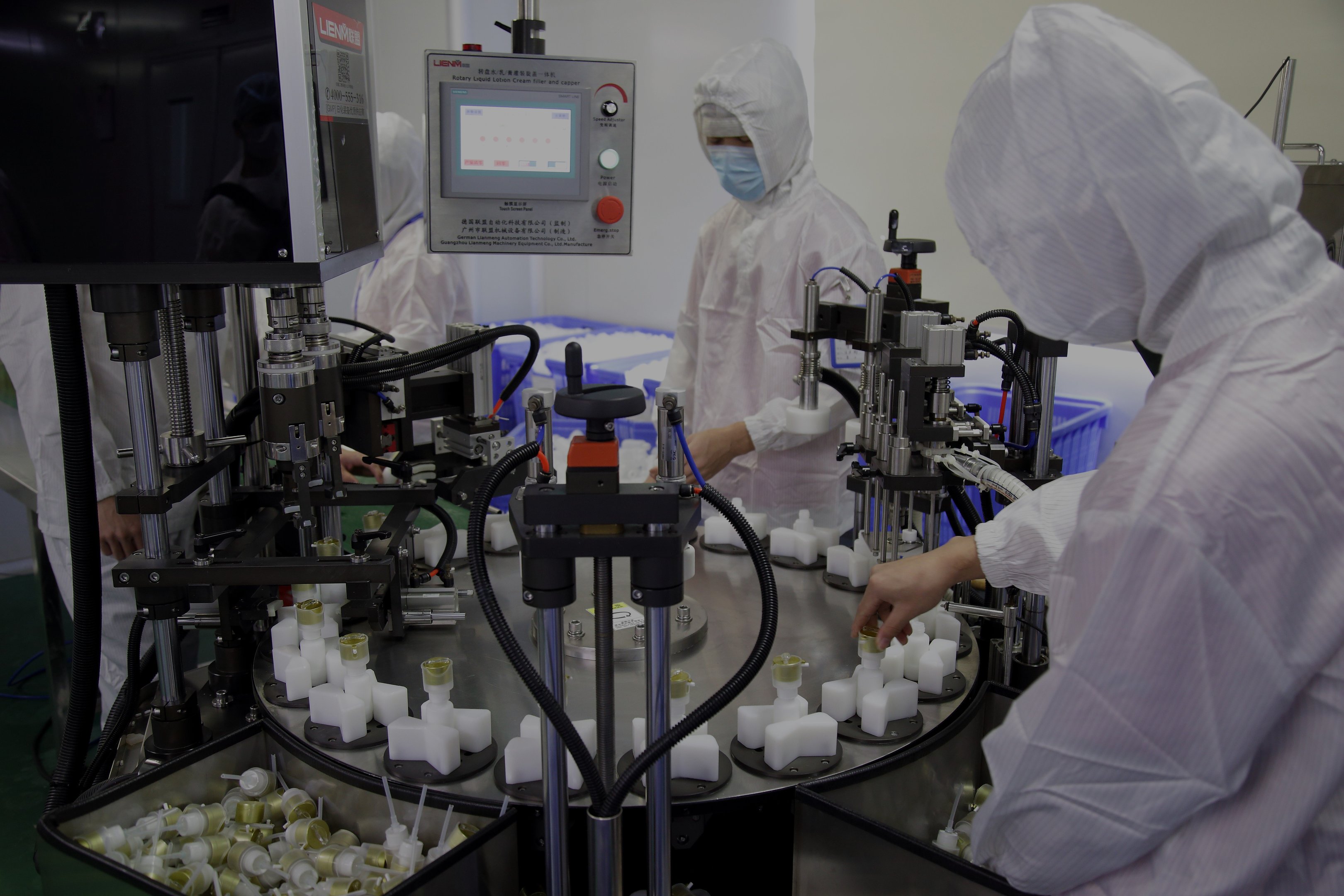
BodyLife Global operates two GMP-certified campuses totalling over 60,000 square meters, compliant with ISO 22716, and has been audited by retail groups in Russia and the United States as well as by ECOCERT within the past year.
Facilities include an in-house R&D laboratory for formulation development, stability testing and ingredient analysis; a quality testing centre covering microbiology, preservative efficacy, pH and viscosity, and heavy metals screening; cleanroom production for sensitive products; and climate-controlled warehousing. Every batch is tested, a Certificate of Analysis is issued, and full traceability is maintained from raw material to shipment.
Certifications include GMP, ISO 22716, ECOCERT, COSMOS, FDA registration, and SMETA audit, with CPNP and CPSR documentation support. Capacity is 100 million units per year across 20+ production lines, serving 300+ clients in 50+ countries since 2002.
Audits and video walkthroughs can be arranged under NDA.
The single best test
Pick a finished batch at random and ask the factory to trace it back to raw material lots. Paper systems fail here. This one exercise tells you more than the entire tour.
Frequently asked questions
Do I need to visit the factory in person?
Not necessarily for a first order, but a video walkthrough covering the six areas above is worthwhile. For a brand planning retail distribution, an in-person audit or a third-party audit report is usually expected by the retailer.
What if the factory refuses a traceability exercise?
Treat it as a failed audit. Traceability is the mechanism by which a recall is scoped; without it, a contamination event affects your entire inventory rather than one batch.
Is a third-party audit report enough?
It is useful evidence but not a substitute. Third-party audits assess the system; your visit assesses whether the system is actually operating on the day. The two together are stronger than either alone.
How long should an audit take?
Half a day minimum for a small factory, a full day for a multi-line site. Anything under two hours is a tour, not an audit.
Next step
Ask any manufacturer you are evaluating — including us — for the certificate numbers, a redacted COA, and a traceability exercise. The response tells you most of what you need to know.
Request a quote · OEM manufacturing · About BodyLife Global
Further Reading
- Case Study: From Concept to Shelf — Four Launch Paths We See
- We Manufacture High-Performance Organic Shampoo for Sensitive Scalps
Looking for a manufacturing partner? OEM manufacturing, private label ODM, custom formulation — get a quote within 48 hours.