DTC brands fail at manufacturing for a reason that has nothing to do with product quality: they pick a partner optimised for a business model they do not have. A DTC brand needs short runs, fast reorders and packaging that photographs well. A factory set up for wholesale needs long runs, stable forecasts and standard components. Choosing the second one is how a launch slips nine months.
BodyLife Global manufactures for DTC brands from two GMP-certified sites, with a 500-unit floor on stock or semi-custom packaging and reorders in 7–14 days. This page is written around how DTC economics actually work, not how a factory brochure describes them.
| Manufacturer type | Cosmetic OEM / ODM / private label manufacturer |
| Location | China — two GMP-certified sites, 60,000+ m² total |
| Capacity | 100M+ units per year across 20+ production lines |
| Minimum order | 500 units per SKU (startup band 500–1,000; standard 3,000) |
| Sampling | 7–10 days from approved brief |
| First production | 20–30 days after sample approval; reorders 7–14 days |
| Quote turnaround | Within 48 hours |
| Certifications | GMP, ISO 22716, ECOCERT, COSMOS, FDA, SMETA, CPNP, CPSR |
| Testing | Every batch tested, COA issued, full batch traceability |
| Clients | 300+ active brands across 50+ countries, since 2002 |
| Colour cosmetics | Foundation and pressed powder only — not eyebrow pencils or eyeshadow |
Why DTC manufacturing is a different problem
A wholesale brand forecasts a season and orders one large batch. A DTC brand learns from ad spend and reorders what works. Those two models need different factories:
- DTC needs to be wrong cheaply. You will launch three products and find that one sells. If the first run was 10,000 units, that mistake is expensive and the capital is gone. A 500–1,000 unit first run turns that into a test.
- DTC needs reorder speed, not unit price. A stockout during a working ad campaign costs more per day than a few cents per unit. A 7–14 day reorder beats a marginally cheaper unit price on a 60-day lead time.
- DTC needs packaging that survives a camera. Your product is seen on a phone screen at 390px wide before it is ever held. Component choice is a marketing decision as much as a cost decision.
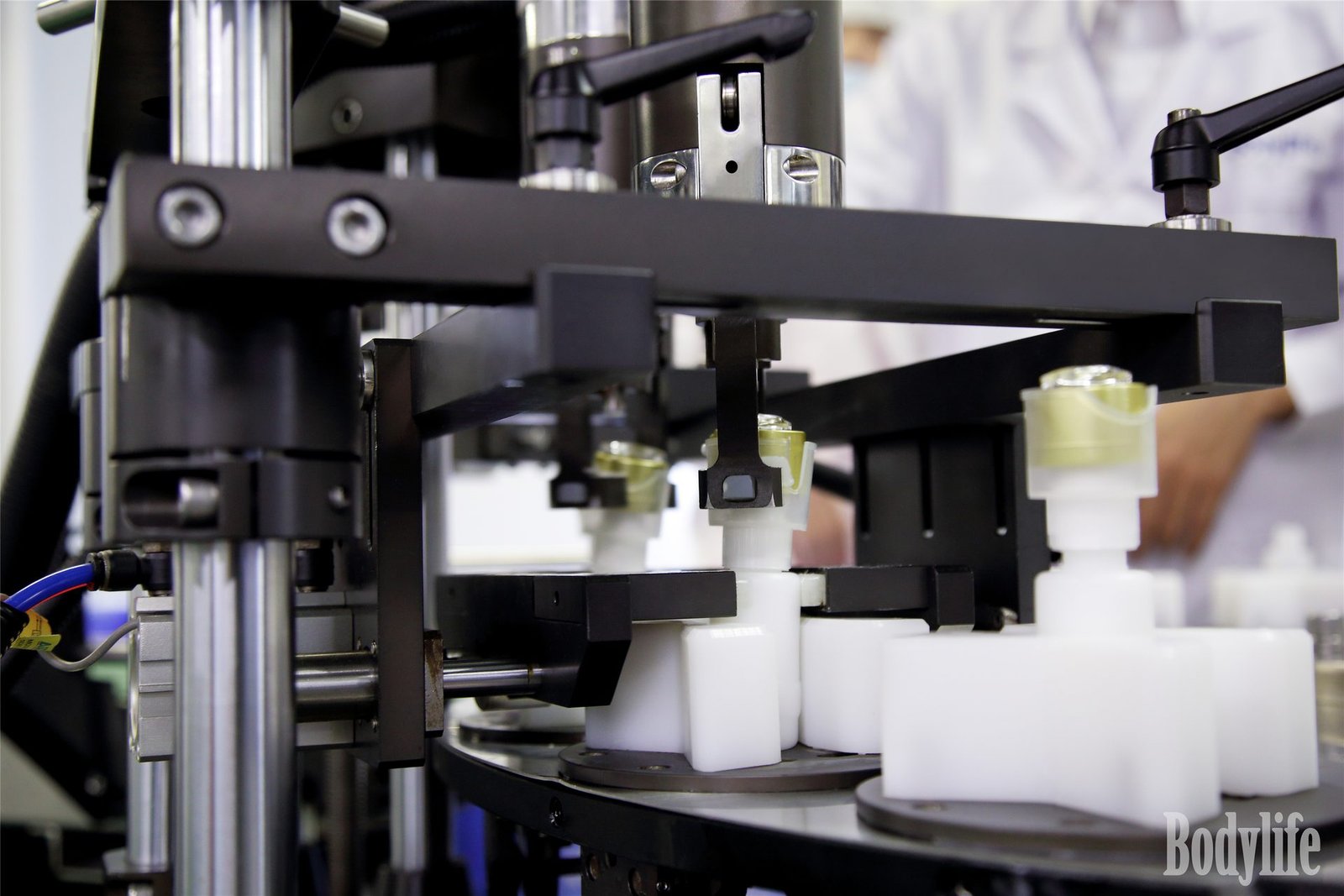
- DTC needs content assets. Product photography, texture shots and manufacturing footage are marketing inputs, not nice-to-haves. Ask whether your factory can support a shoot.
The margin math most founders get wrong
At low volume, unit cost is not the number that decides whether the brand works. Landed cost is:
Landed cost = unit cost + freight per unit + duty per unit + the cost of capital tied up in inventory
A 500-unit run at a high unit price can be cheaper in real terms than a 10,000-unit run at a low unit price, because the second one locks capital into inventory you may not sell. For a brand still finding its product, the second number is the risky one.
This is why the honest advice for a first DTC launch is usually: run small, pay the unit-cost penalty deliberately, and treat it as the price of information. Move to larger runs once a SKU has proven repeat purchase, not before.
What to ask a manufacturing partner as a DTC brand
- “What is the smallest run you will actually schedule?” — Not the quoted minimum. The smallest batch they will put on a line this quarter.
- “What is your reorder lead time after the first batch?” — This is the number that decides whether you can run paid traffic safely. Ours is 7–14 days.
- “Which components are stock, and which require a mould or a large minimum?” — Stock and semi-custom packaging is what makes a low first run possible. Custom tooling moves the floor to thousands of units regardless of formula.
- “Can I see the packaging before I commit to a run?” — Always. A component that photographs badly cannot be fixed by copy.
- “What is excluded from the quote?” — Testing, decoration, freight, duty, artwork. The exclusions are usually where the budget breaks.
- “Who owns the formula?” — Critical for DTC because the formula is part of your brand equity. Get the ownership position in writing before you pay a development fee.
The three launch paths, and what each costs you
Private label (stock formula, your branding)
Fastest and cheapest route to market. You choose from existing formulations and apply your brand. Time to first batch is short because only packaging and artwork are new. The trade-off is differentiation: your product shares a formula with other brands. Suited to a first launch or a fast category test.
OEM (your formula, our production)
You bring the formulation, or specify it, and we manufacture it. This is the normal route for an established DTC brand with a product point of view. Requires a bench trial and stability work, so it costs more time up front — but the formula is yours.
ODM / custom formulation (we develop it)
Development from a written brief, typically 3–6 months. The development fee is credited against the first order. The right route when the product concept is the brand’s whole differentiation — but do not choose it because it sounds more legitimate. It is slower and it is not necessary for a first launch.

A realistic first-year timeline
- Weeks 1–2: brief, format selection, quote (48-hour turnaround), packaging shortlist
- Weeks 2–4: sampling (7–10 days), packaging samples in hand, artwork
- Weeks 4–8: sample approval, stability and microbiology testing, first production order placed
- Weeks 8–12: production (20–30 days), freight, customs, 3PL intake
- Month 4 onward: sell, measure, reorder in 7–14 days on what works
Add 3–6 months if the route is custom formulation rather than private label or OEM.
Frequently asked questions
Do you work with brands that are pre-launch?
Yes. The 500–1,000 unit band exists for that stage. What we will not do is encourage a pre-launch brand into custom formulation when private label would get them to market faster and cheaper. Ask us which route fits your stage.
Can I get product photography or video from the factory?
Ask early, because it needs scheduling around production. Manufacturing footage and in-line photography are far more credible in DTC content than stock imagery, but they have to be planned rather than requested after the batch has run.
What if my product does not sell?
That is what the low first run is for. A 500-unit order that fails costs you the batch and the testing; a 10,000-unit order that fails costs you the capital that would have funded the next attempt. Plan for the first outcome.
Do you produce colour cosmetics?
Foundation and pressed powder, yes. Eyebrow pencils and eyeshadow, no — those need different tooling and are outside our capability. If your concept depends on a format we do not run, we will say so at the brief stage rather than after sampling.
How do I know the batch will match the sample?
Every batch is tested and issued with a COA recording the measured parameters. The sample proves the formula; the COA is what verifies your specific production run against it. Ask to see a real COA from a previous batch during supplier evaluation — not a template.
Who is BodyLife Global
BodyLife Global is a cosmetic OEM/ODM manufacturer based in China, operating two GMP-certified sites with 20+ production lines and a capacity of 100M+ units per year. BodyLife Global holds GMP, ISO 22716, ECOCERT, COSMOS, FDA, SMETA, CPNP and CPSR certifications, and works with 300+ active clients across 50+ countries. The company was founded in 2002 and manufactures skincare, body care, hair care and pet care; for colour cosmetics it produces foundation and pressed powder only.
Next step
Tell us the format, fill size, target first-run volume and launch date. We will come back within 48 hours with a quote and a recommendation on which of the three routes fits your stage — including if the answer is “start smaller than you planned”. Request a quote · Low MOQ manufacturing · Private label ODM · Certifications