
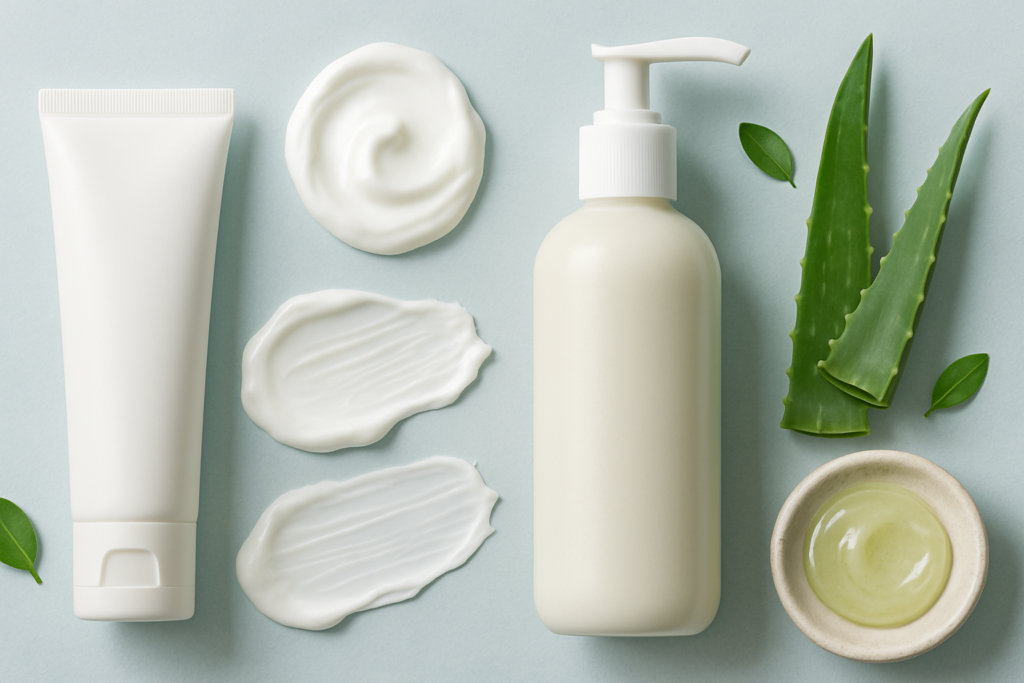
If you have eczema-prone skin, the difference between a hand cream and a body lotion is more than a matter of texture. It can affect how long moisture stays on the skin, how well the formula holds up to repeated handwashing, and whether irritated areas feel soothed or sting even more. For many people in the US, this matters every day. Search demand and social engagement around eczema hand care continue to rise, while consumer discussions on Amazon, Google Trends, Reddit, and TikTok show a clear pattern: many people are still unhappy with products that feel too greasy, do not last, or fail to calm flare-prone skin.
That is why the comparison matters. A body lotion may be useful for large surface areas and daily maintenance, but a non greasy hand cream for eczema is often the better choice when hands are dry, cracked, overwashed, or exposed to cold weather and irritants. The best option depends on where the eczema shows up, how severe the dryness is, and what ingredients the formula uses. In this article, we compare hand creams and body lotions for eczema-prone skin, with a close look at ingredients such as colloidal oatmeal, ceramides, and hyaluronic acid, which are repeatedly highlighted in current product development for sensitive skin.
The Difference Between Hand Creams and Body Lotions
Hand creams and body lotions are both moisturizers, but they are not built for the same job.
Hand creams are usually richer and more protective. They are designed for skin that is exposed to frequent washing, sanitizers, cleaning products, friction, and weather changes. Hands also have fewer oil glands than some other parts of the body, which makes them more likely to become dry and irritated. For eczema-prone skin, that means a hand cream often needs to do two things at once: replace lost moisture and create a barrier that helps keep irritants out.
Body lotions are typically lighter and easier to spread over larger areas such as arms, legs, and torso. They are often made for quick application and fast absorption, which makes them practical for daily use after showering. For mild dryness, a lotion may be enough. But for eczema-prone hands, a standard body lotion can fall short because it may not stay in place long enough or provide enough occlusion.
In formulation terms, the difference often comes down to the balance of water, oils, humectants, emollients, and occlusive agents.
- Lotions generally have a higher water content and a lighter feel.
- Creams usually contain more lipids and structure-building ingredients, which help form a stronger moisture barrier.
- Hand creams for eczema may also be designed to resist wash-off better than standard body products.
That does not mean every hand cream is automatically better. Some are heavily fragranced, some rely on a greasy finish without meaningful barrier support, and some include botanical extracts that can be irritating for compromised skin. Likewise, some body lotions are carefully formulated for sensitive skin and can work very well for mild eczema on the body.
For eczema-prone users, the label matters less than the formula. A good product should be fragrance-free, suitable for sensitive skin, and built around barrier-supporting ingredients. This is one reason OEM and private label development in this category increasingly focuses on clinically credible ingredients rather than cosmetic claims alone.
When to Use Hand Cream vs. Body Lotion
The easiest way to choose is to match the product to the skin condition and the body area.
Use hand cream when:
- You wash your hands frequently at work or at home.
- Your hands feel tight, rough, flaky, or cracked.
- You are dealing with seasonal flare-ups, especially in winter.
- You need a product that can be reapplied throughout the day without interfering with daily tasks.
- You want more targeted support for eczema-prone patches on fingers, knuckles, and around the nails.
This is where a non greasy hand cream for eczema becomes especially useful. People often stop reapplying if a formula leaves a heavy film on the palms. A well-designed hand cream should absorb quickly enough for daytime use while still leaving behind enough protective lipids to reduce moisture loss.
Use body lotion when:
- You have mild dryness over larger areas such as arms, legs, or torso.
- You want a product for all-over daily maintenance after bathing.
- You prefer a lighter texture for warm weather or daytime wear.
- Your eczema is currently calm and your main goal is routine hydration.
For many people, the best routine is not either-or. It is both.
A practical eczema-prone regimen often looks like this:
- Body lotion after showering for broad hydration.
- Hand cream after every handwash and before bed for targeted repair.
This combination makes sense because the skin on the hands faces different stress than the skin on the body. It also reflects what consumers are asking for in the market: products that fit real-life use, not just shelf claims. Current opportunity data shows strong demand for fast-acting relief, quick absorption, and dermatologist-friendly positioning, especially in hand care formats.
Benefits of Hand Creams for Eczema-Prone Skin
For eczema-prone hands, a dedicated hand cream usually offers three clear advantages: better barrier support, better staying power, and more targeted relief.
1. Stronger barrier protection
Eczema is closely linked to a weakened skin barrier. When that barrier is compromised, water escapes more easily and irritants can penetrate more readily. Hand creams are often better equipped to address this because they can carry a higher level of emollients and barrier-support ingredients.
Three ingredients stand out in current formulation direction:
- Colloidal oatmeal: widely used to soothe dry, itchy, irritated skin and support the skin barrier.
- Ceramides: lipids that help replenish the skin barrier and reduce transepidermal water loss.
- Hyaluronic acid: a humectant that helps attract and hold water in the upper layers of the skin.
Used together, these ingredients can address several eczema-related concerns at once. Colloidal oatmeal helps calm discomfort, ceramides help repair the barrier, and hyaluronic acid supports hydration. This ingredient combination is specifically highlighted in the market opportunity for eczema hand cream because it aligns with both consumer demand and credible product positioning.
2. Better performance after repeated washing
Hands are washed far more often than most other body areas. Every wash can strip away natural oils and weaken the skin barrier further. A body lotion may feel good right after application, but it may not hold up well through repeated washing and drying cycles. Hand creams are more likely to provide a lasting protective layer, especially if they include a balanced mix of humectants, emollients, and occlusives.
This matters for healthcare workers, parents, food service staff, cleaners, and anyone who uses soap or sanitizer throughout the day. In these cases, the formula needs to be practical. If it is too greasy, people will avoid it. If it is too light, it will not last. The sweet spot is a cream that offers quick absorption with durable barrier support.
3. More suitable for overnight repair
Nighttime is often the best time to use a richer hand cream. Skin has several uninterrupted hours to recover, and the product is less likely to be washed off. For eczema-prone hands, applying a cream before bed can help soften rough patches and reduce morning tightness.
Some users also prefer pairing hand cream with cotton gloves overnight. While this is not necessary for everyone, it can help improve contact time for very dry hands. In product development, this is one reason richer evening-use variants can sit alongside lighter daytime versions in a line extension strategy.
4. Easier to position for sensitive-skin compliance
From a manufacturing and brand perspective, hand creams for eczema-prone skin are often developed with a tighter claim strategy: fragrance-free, suitable for sensitive skin, dermatologist-recommended positioning, and quick absorption. These claims are specifically noted in the current market direction because they speak directly to consumer skepticism. Many shoppers have already tried multiple products that promised relief but did not deliver. A simpler, evidence-based formula often builds more trust than a long list of trend ingredients.
Benefits of Body Lotions for Eczema-Prone Skin
Body lotions still have an important place in eczema care. They are not the wrong choice; they are simply better suited to different situations.
1. Better for large-area daily moisturizing
If eczema-prone skin extends beyond the hands, a body lotion is often the most practical option. It spreads quickly, absorbs fast, and is easier to use on arms, legs, and torso. This makes it more likely that people will apply enough product consistently, which is essential for barrier maintenance.
Consistency matters because eczema-prone skin usually benefits from regular moisturizing even between flare-ups. A lotion can make that routine easier to maintain, especially after bathing when the skin is still slightly damp.
2. More comfortable in warm weather or daytime use
Some people dislike the heavier feel of creams, especially in humid climates or during summer. A lighter body lotion can feel more comfortable while still delivering hydration. For users with mild eczema or mainly seasonal dryness, that may be enough for much of the year.
This is also relevant in product portfolio planning. Not every eczema-prone consumer wants the richest possible formula. Some want a lighter maintenance product for daytime and a richer cream only when symptoms worsen.
3. Often more cost-effective for full-body use
Using a hand cream over the entire body is usually not practical. Body lotions are generally packaged and priced for larger-area application, making them more economical for daily all-over use. In a premium category where recommended price positioning may sit around $16-$20 for a specialized hand cream, a lotion can serve as the more efficient companion product.
For brands and retailers, this opens the door to a two-step system: a targeted hand cream in a smaller format, such as a travel-friendly 50 ml tube, and a larger home-use body product for routine care. The opportunity brief specifically points to a 50 ml travel plus 200 ml home duo as a strong concept direction.
4. Useful for maintenance between flare-prone periods
When eczema is not actively flaring, a gentle body lotion with barrier-support ingredients may be enough to maintain comfort and reduce dryness. This can be especially helpful for people who want a simpler routine or who are introducing a new product gradually.
That said, the formula still matters. For eczema-prone skin, body lotions should ideally avoid fragrance and unnecessary sensitizers. A lotion that contains ceramides and humectants can be a better option than a standard cosmetic lotion focused mainly on slip and scent.
Making the Right Choice for Your Skin
So, which is better for eczema-prone skin: hand cream or body lotion?
The short answer is this:
- For eczema-prone hands, hand cream is usually the better choice.
- For larger body areas and daily maintenance, body lotion is often more practical.
If your main concern is dry, irritated, overwashed hands, a non greasy hand cream for eczema is likely to give you better results than a standard body lotion. Look for formulas built around colloidal oatmeal, ceramides, and hyaluronic acid, and avoid added fragrance if your skin is reactive. These ingredients are not random trends. They are part of the current formulation focus because they address the real needs behind eczema-prone skin: soothing discomfort, restoring the barrier, and improving moisture retention.
If your skin concerns are broader and milder, a body lotion can still play a valuable role, especially after bathing and during maintenance periods. Many people do best with both products in the same routine rather than choosing one for every situation.
For brands developing in this category, the market signal is clear. US consumers are actively looking for eczema solutions that feel gentle, work quickly, and fit into daily life. They are also skeptical of overpromising. That creates room for products with straightforward science, sensitive-skin compliance, and textures that people will actually use consistently. A fragrance-free hand cream with colloidal oatmeal, ceramides, and hyaluronic acid in a fast-absorbing, non-greasy base is well aligned with current demand.
If you are exploring a new eczema-prone hand care product for the US market, our factory team can help with formulation development, texture tuning, claims positioning, and packaging strategy. We specialize in personal care products that combine natural gentleness with scientific efficacy, including sensitive-skin formats designed for real consumer use. Contact us to discuss a custom hand cream, body lotion, or paired eczema-care concept for your brand.
Related Articles
- Hand Cream For Eczema: Hand Creams vs. Ointments for Eczema: Which Is Better?
- Hand Cream For Eczema: How to Create a Daily Routine for Eczema-Prone Hands
- Hand Cream For Eczema: Top 10 Hand Creams for Eczema-Prone Hands: Expert Recommenda
Trusted Resources
Related Reading
Developing your own product line in this category? our skincare manufacturing or custom formulation services — request a quote.
Pingback: Everything You Need to Know About Non-Greasy Creams for Aging Skin - BodyLife Global
Pingback: Hand Cream for Eczema: 10 Best Picks for Dry Hands